
 Call us now:

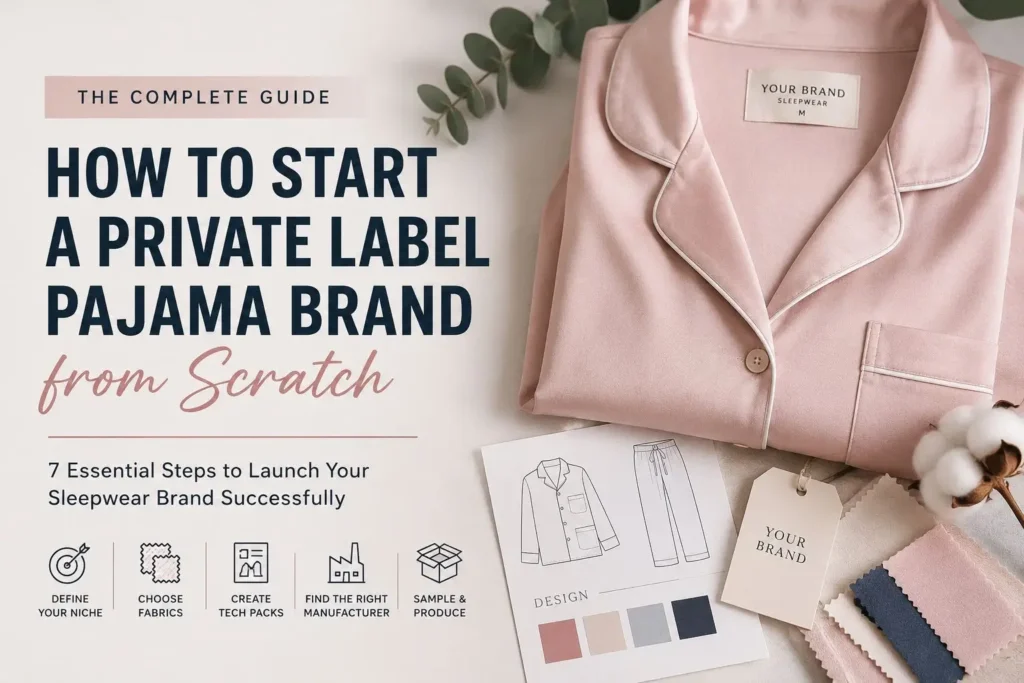
Starting a private label pajama brand involves much more than putting your logo on an existing pajama set. From choosing the right fabric and defining your target market to creating a tech pack, finding a reliable manufacturer, and managing production, every stage can affect your product quality, costs, and launch timeline.
For entrepreneurs, fashion startups, and e-commerce brands, private label pajamas can provide an opportunity to build a distinctive sleepwear collection without developing every manufacturing process in-house.
If you’re wondering how to start a private label pajama brand, this guide walks you through the key steps—from defining your brand concept and selecting fabrics to sampling, manufacturing, packaging, and launching your first collection.
Step 1: Define Your Pajama Brand Niche and Target Market
Before contacting a pajama manufacturer, determine exactly who your products are designed for.
The sleepwear market covers a wide range of customers and price points. Your target audience will influence almost every aspect of product development, including fabric selection, design, sizing, packaging, pricing, and manufacturing requirements.
Some common private label pajama niches include:
Eco-Friendly and Sustainable Sleepwear
Brands targeting environmentally conscious consumers may focus on materials such as organic cotton, bamboo-based fabrics, or recycled fibers.
These products often emphasize:
- Breathability
- Soft handfeel
- Moisture management
- Responsible material sourcing
- Textile certifications
If sustainability is central to your brand positioning, communicate your material requirements clearly to your manufacturer before sampling.
Luxury Pajamas and Resort Loungewear
Luxury sleepwear brands typically focus on premium fabrics, refined construction, and sophisticated details.
Depending on the target price point, materials may include:
- Silk
- Modal
- Micro-modal
- Premium cotton
- Satin
- High-quality blended fabrics
Details such as contrast piping, premium buttons, embroidery, custom labels, and high-end packaging can also contribute to a luxury positioning.
Matching Family and Seasonal Pajamas
Matching pajama collections can be particularly suitable for seasonal campaigns and gift-oriented businesses.
These collections may require:
- Multiple size ranges
- Consistent color matching
- Digital or custom printing
- Flexible size grading
- Seasonal production planning
Defining your niche before product development will help you communicate a much clearer brief to your private label pajama manufacturer.
Step 2: Choose the Right Pajama Fabric and GSM
Fabric selection is one of the most important decisions when developing private label pajamas.
The right material should match your target market, climate, price point, garment construction, and desired handfeel.
Common pajama fabrics include:
- Cotton
- Modal
- Bamboo-based fabrics
- Silk
- Satin
- Flannel
- Cotton blends
Consider GSM and Fabric Construction
GSM, or grams per square meter, indicates fabric weight. However, there is no single “ideal” GSM for all pajamas.
Lightweight knitted fabrics may be suitable for breathable summer sleepwear, while heavier woven or knitted fabrics can provide additional warmth for colder seasons.
When evaluating pajama fabrics, consider:
- Fabric weight
- Fiber composition
- Stretch
- Breathability
- Softness
- Drape
- Durability
- Shrinkage
- Colorfastness
- Pilling resistance
For example, a lightweight modal fabric may provide a smooth, fluid feel for premium loungewear, while cotton flannel may be more suitable for warm winter pajamas.
Step 3: Create a Pajama Tech Pack and Define Custom Details
Once your brand positioning and fabric direction are established, the next step is to turn your concept into clear technical specifications.
A pajama tech pack acts as a blueprint for the manufacturer. It reduces communication problems during sampling and helps ensure that the final garment matches your expectations.
A typical tech pack may include:
- Technical drawings
- Measurements
- Size specifications
- Fabric composition
- GSM requirements
- Color references
- Stitching details
- Seam construction
- Label placement
- Artwork
- Packaging requirements
- Quality standards
Customize the Details That Define Your Brand
Private label pajamas can be customized far beyond the logo.
Piping and trims
Contrast piping around collars, cuffs, pockets, and pant openings can create a more premium appearance.
Buttons and closures
Depending on your design, options may include resin buttons, engraved buttons, shell-style buttons, drawstrings, or other closures.
Labels and branding
Consider:
- Woven labels
- Printed labels
- Heat-transfer logos
- Size labels
- Custom hangtags
Packaging
Custom packaging can include branded polybags, boxes, tissue paper, inserts, or other presentation materials.
The more clearly these requirements are documented before sampling, the easier it is for your manufacturer to provide accurate samples.
Step 4: Set Your MOQ, Budget, and Production Requirements
Before requesting a quotation, establish your basic purchasing requirements.
This is particularly important for new brands because your first production order may need to balance product variety with available capital.
Consider the following:
Minimum Order Quantity
Ask potential manufacturers about their:
- Sample MOQ
- Bulk production MOQ
- MOQ per color
- MOQ per style
- MOQ per size
MOQ can vary depending on fabric, customization, printing, dyeing, and production requirements.
A startup may prefer a manufacturer with flexible MOQ options, especially when testing a new collection.
Target Budget
Your total product development budget may include:
- Fabric
- Sampling
- Pattern development
- Labels
- Packaging
- Bulk production
- Quality inspection
- Freight
- Import costs
Instead of focusing only on the unit price, calculate your estimated landed cost so you have a clearer picture of the total cost of bringing the product to market.
Production Timeline
Ask about:
- Sample development time
- Sample revisions
- Fabric sourcing time
- Bulk production lead time
- Quality inspection
- Packaging
- Shipping
A realistic timeline is particularly important if you are planning a seasonal pajama launch.
Step 5: Find a Reliable Private Label Pajama Manufacturer
Choosing the right private label pajama manufacturer is one of the most important decisions when building your brand.
A suitable manufacturer should not simply offer a low unit price. You should also evaluate its ability to support product development, quality control, communication, and long-term production.
Look for a manufacturer that can provide services such as:
- Fabric sourcing
- Pattern development
- Sampling
- OEM/ODM production
- Custom labels
- Custom packaging
- Quality control
- Bulk manufacturing
Evaluate Factory Compliance and Quality Systems
For brands targeting US and European markets, factory compliance and material safety can be important parts of supplier evaluation.
Depending on your product and market requirements, you may want to consider certifications and standards such as:
- BSCI
- OEKO-TEX® STANDARD 100
- GOTS
- FSC
However, certification requirements can vary depending on the material, product, customer requirements, and target market. Always verify the scope and validity of certifications with the manufacturer.
Questions to Ask a Pajama Manufacturer
Before choosing a supplier, consider asking:
- What is your MOQ?
- Can you develop custom samples?
- Can you source fabrics?
- Can you provide custom labels and packaging?
- What certifications or compliance documentation can you provide?
- What is your sample lead time?
- What is your bulk production lead time?
- How do you manage quality control?
- Can you support repeat orders?
- Can you manufacture different sleepwear styles?
Internal link opportunity: Link “private label pajama manufacturer” to Beyson’s relevant commercial page.
Step 6: Request Samples, Test, and Refine Your Pajama Collection
Never move directly from a digital concept to bulk production without properly reviewing physical samples.
A professional sampling process allows you to identify problems before they affect a large production order.
Start With Fabric Swatches
Before developing complete garments, request fabric swatches when possible.
Evaluate:
- Softness
- Stretch
- Weight
- Color
- Drape
- Transparency
- Surface texture
You can then select the fabric that best matches your brand positioning.
Review the First Sample
Once the first garment sample is available, check:
- Measurements
- Fit
- Stitching
- Seam quality
- Piping
- Button placement
- Label positioning
- Color
- Fabric handfeel
- Overall appearance
Test Washing and Shrinkage
Sleepwear is frequently washed, so dimensional stability and fabric performance are important.
Depending on your product requirements, consider testing:
- Shrinkage
- Colorfastness
- Pilling
- Seam strength
- Fabric appearance after washing
If changes are required, provide clear feedback and request a revised sample before approving bulk production.
Step 7: Approve Bulk Production, Packaging, and Launch
Once the final sample meets your requirements, you can move into bulk production.
Before production begins, confirm the final specifications with your manufacturer.
Your production confirmation should include:
- Approved sample
- Final measurements
- Fabric composition
- Fabric color
- Size breakdown
- Labels
- Artwork
- Packaging
- Quantity
- Delivery schedule
- Quality requirements
Plan Your Packaging
Packaging is an important part of the customer experience, particularly for premium sleepwear brands.
Depending on your positioning, you may use:
- Custom polybags
- Branded boxes
- Tissue paper
- Hangtags
- Product cards
- Care instructions
Make sure packaging specifications are approved before mass production to avoid delays.
Plan Your Launch Around Production Lead Times
If your pajama collection is intended for:
- Christmas
- Valentine’s Day
- Summer collections
- Resort seasons
- Back-to-school campaigns
plan production and shipping well in advance.
Seasonal demand can place additional pressure on manufacturing capacity and international logistics.
Frequently Asked Questions About Starting a Private Label Pajama Brand
How much does it cost to start a private label pajama brand?
The cost depends on factors such as fabric selection, product complexity, order quantity, customization, packaging, sampling, and shipping.
A small startup collection may require less upfront investment than a large multi-style collection, but the exact cost should be calculated based on your product specifications and target quantity.
What is the MOQ for private label pajamas?
MOQ varies by manufacturer and product requirements.
It may depend on:
- Fabric type
- Custom dyeing
- Printing
- Embroidery
- Number of colors
- Number of styles
- Packaging requirements
Instead of looking only for the lowest MOQ, choose a manufacturer whose MOQ is compatible with your launch strategy and long-term production plans.
How do I find a private label pajama manufacturer?
Start by identifying manufacturers that specialize in sleepwear or apparel production.
Evaluate:
- Manufacturing capabilities
- Product development support
- MOQ
- Sample quality
- Certifications
- Quality control
- Communication
- Production capacity
- Lead times
Requesting samples before committing to bulk production is one of the best ways to evaluate a potential manufacturing partner.
What fabrics are best for private label pajamas?
There is no single fabric that is best for every pajama brand.
Cotton, modal, bamboo-based fabrics, silk, satin, and flannel can all be suitable for different product concepts.
Your choice should depend on:
- Target customer
- Climate
- Price point
- Desired handfeel
- Garment design
- Brand positioning
Can I customize private label pajama labels and packaging?
Yes. Depending on the manufacturer’s capabilities, private label pajama programs can include customized:
- Neck labels
- Care labels
- Hangtags
- Logos
- Packaging
- Polybags
- Boxes
Discuss these requirements during the sampling and quotation stage so they can be included in the production plan.
Conclusion: Turn Your Pajama Brand Idea Into a Production-Ready Collection
Learning how to start a private label pajama brand requires more than developing an attractive design. A successful launch depends on making the right decisions about your target market, fabrics, technical specifications, MOQ, sampling, manufacturing, quality control, and packaging.
The right manufacturing partner can simplify this process by supporting multiple stages of product development and production under one supply chain.
If you’re developing a new private label pajama collection, Beyson Apparel can support brands with custom sleepwear development, fabric sourcing, OEM/ODM manufacturing, custom labels, packaging, sampling, and bulk production.
Ready to develop your private label pajama collection?
* This article was written by the manufacturing team of Beyson Apparel. We are a clothing ODM/OEM factory with 15+ years of experience, covering products such as Underwear, T-shirt, Polo Shirts, Hoodies, Pajamas, Shorts and more. Direct inquiry, reply within 12 hours *