
 Call us now:

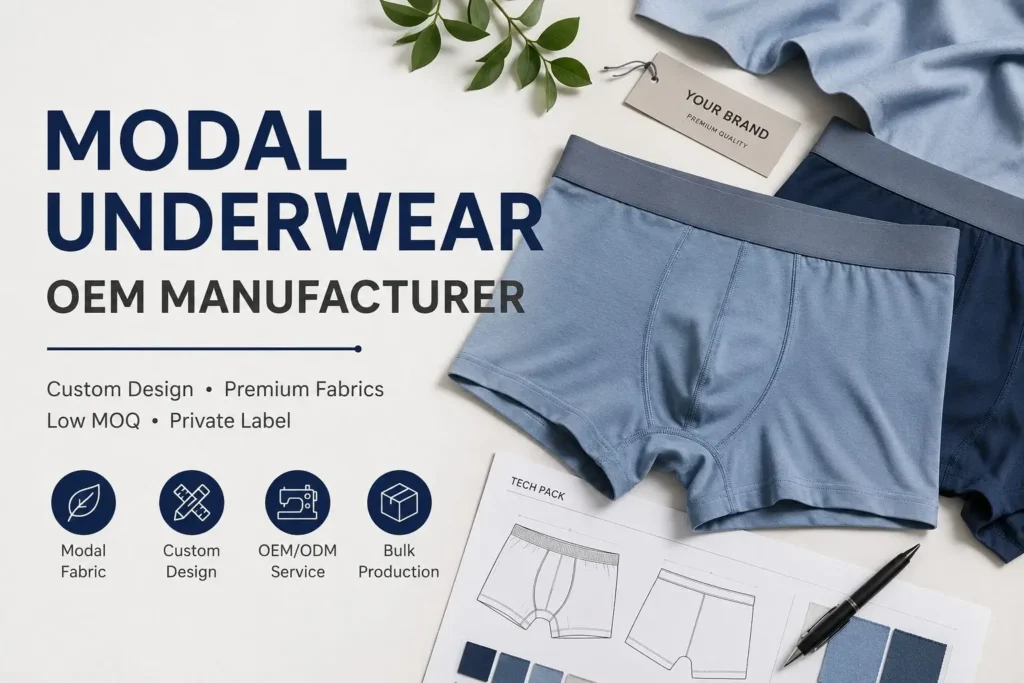
Modal underwear is becoming increasingly popular among clothing brands looking for soft, lightweight, and comfortable fabrics for premium underwear collections. For brands that want to develop their own products, working with an experienced modal underwear OEM manufacturer can provide support from fabric selection and product development to sampling and bulk production.
Unlike ready-made underwear, OEM manufacturing allows brands to customize important product details, including fabric composition, colors, styles, waistbands, labels, packaging, and other specifications.
This guide explains what brands should consider when choosing a modal underwear OEM manufacturer and how to manage the development process from the initial idea to bulk production.
1. Why Choose Modal Fabric for Underwear?
Modal is a regenerated cellulose fiber commonly used in underwear, sleepwear, T-shirts, and other garments that require a soft and comfortable hand feel.
Its smooth texture and lightweight characteristics make modal particularly suitable for next-to-skin apparel.
Depending on the fabric construction and blend, modal underwear can offer several advantages:
- Soft and smooth hand feel
- Lightweight comfort
- Good moisture management
- Excellent drape
- Flexible and comfortable fit
- Suitable for everyday underwear
However, not all modal fabrics have the same performance. Fiber quality, GSM, blend ratio, knitting construction, finishing, and manufacturing standards can all affect the final product.
2. What Is a Modal Underwear OEM Manufacturer?
A modal underwear OEM manufacturer produces underwear according to a brand’s specifications instead of simply selling standardized products.
Depending on the supplier’s capabilities, OEM services can include:
- Modal fabric sourcing
- Custom underwear design
- Pattern development
- Size grading
- Sample development
- Custom colors
- Custom waistbands
- Logo and label customization
- Custom packaging
- Bulk production
- Quality control
This makes OEM manufacturing suitable for clothing brands that want to develop unique underwear collections rather than resell generic products.
If you are developing a broader underwear collection, you can also explore our custom underwear manufacturing services for additional product options.
3. How to Select the Right Modal Fabric
Fabric selection is one of the most important stages of modal underwear development.
When evaluating modal fabric, buyers should consider more than the word “modal.” Important specifications include:
- Fiber composition
- Modal and elastane ratio
- Fabric GSM
- Stretch and recovery
- Fabric softness
- Breathability
- Colorfastness
- Shrinkage
- Finishing quality
Modal is often blended with elastane to improve stretch and recovery. The appropriate ratio depends on the desired fit, support, and product design.
Before approving bulk production, brands should request fabric samples and evaluate hand feel, stretch, recovery, appearance, and wash performance.
4. Custom Modal Underwear Options
One of the main advantages of working with an OEM manufacturer is the ability to customize the product around your brand identity.
Custom Colors
Brands can develop custom colors according to their brand guidelines or seasonal collections. Pantone references can be used for color matching and lab dip approval.
Custom Waistbands
The waistband is an important functional and branding element in underwear. Brands can customize its color, width, design, and logo placement.
Custom Logos and Labels
Depending on the product requirements, customization may include:
- Woven labels
- Printed labels
- Heat-transfer logos
- Jacquard waistbands
- Custom hangtags
Custom Packaging
Packaging can also be customized to create a consistent brand experience. Options may include branded bags, boxes, cards, and retail packaging.
5. OEM vs. Ready-Made Modal Underwear
Before choosing a supplier, brands should understand the difference between OEM manufacturing and purchasing ready-made underwear.
OEM manufacturing generally provides greater control over product quality, design, branding, and production specifications.
| Feature | OEM Manufacturing | Ready-Made Products |
|---|---|---|
| Design | Customizable | Usually standardized |
| Fabric | Can be customized | Supplier selected |
| Logo | Custom branding | Limited options |
| Packaging | Customizable | Usually standardized |
| Product Development | Supported | Limited |
6. Understanding MOQ for Modal Underwear
MOQ, or Minimum Order Quantity, is an important consideration when selecting a modal underwear manufacturer.
MOQ can vary depending on:
- Fabric type
- Fabric color
- Order quantity
- Underwear design
- Custom waistband requirements
- Labels and packaging
A lower MOQ can be particularly useful for startups and emerging brands that want to test a new product before investing in large inventory quantities.
However, buyers should evaluate MOQ together with unit cost, fabric requirements, and expected sales rather than focusing on MOQ alone.
7. Modal Underwear Sample Development
Sample development is an essential part of the OEM manufacturing process. A physical sample allows brands to evaluate the actual product before committing to bulk production.
A typical sampling process may include:
- Submit the design and technical specifications
- Select the modal fabric
- Confirm colors and trims
- Create the first sample
- Review fit and construction
- Make necessary revisions
- Approve the final sample
Sampling can help identify problems with fit, fabric performance, stitching, waistband construction, and branding before bulk manufacturing.
For buyers who are new to custom underwear sourcing, our guide on how to order underwear samples online provides additional information about the sampling process.
8. Quality Control for Modal Underwear
Quality control is especially important for underwear because the garment is worn directly against the skin.
A professional manufacturer should establish quality checks throughout production.
Important quality control areas include:
- Fabric quality
- Fabric weight
- Color consistency
- Stretch and recovery
- Seam quality
- Waistband attachment
- Logo placement
- Size measurements
- Overall garment appearance
Consistent quality control helps reduce defects and maintain product consistency between production batches.
9. Certifications and Compliance
For international apparel brands, certifications and compliance should also be considered when selecting a manufacturing partner.
Depending on the market and product requirements, buyers may look for certifications related to textile safety, organic materials, sustainability, and social compliance.
Examples may include:
- OEKO-TEX Standard 100
- GOTS
- BSCI
- FSC
Buyers should verify the validity and scope of applicable certifications to confirm whether they apply to the relevant materials, facilities, or products.
10. What Affects Modal Underwear OEM Pricing?
There is no fixed price for OEM modal underwear because production costs depend on the specifications of each project.
Major cost factors include:
- Modal fabric composition
- Fabric GSM
- Order quantity
- Underwear design
- Logo customization
- Waistband construction
- Labels and trims
- Packaging
- Sampling requirements
- Quality standards
When requesting a quotation, buyers should provide detailed specifications so the manufacturer can calculate the production cost more accurately.
If you are comparing different production options, understanding the factors behind custom underwear bulk order costs can also help you plan your production budget.
11. How to Choose a Reliable Modal Underwear OEM Manufacturer
The right manufacturing partner should provide more than a competitive price. Brands should evaluate the manufacturer’s experience, production capabilities, quality control, and communication.
Before choosing a supplier, consider:
- OEM and ODM experience
- Modal fabric sourcing capabilities
- Sample development process
- Production capacity
- Quality control procedures
- Customization capabilities
- MOQ flexibility
- Communication and project management
- Relevant certifications
Requesting samples and reviewing previous production experience can help buyers determine whether a manufacturer is suitable for their product requirements.
12. Why Work With an Experienced Modal Underwear OEM Manufacturer?
Developing modal underwear requires more than simply selecting a soft fabric. Manufacturers need to understand fabric behavior, garment construction, fit, stretch recovery, branding, and production requirements.
An experienced OEM partner can help coordinate:
- Fabric sourcing
- Product development
- Pattern making
- Sampling
- Custom branding
- Bulk production
- Quality control
- Packaging
This integrated approach can make product development more efficient and help brands maintain consistent quality as they scale.
Conclusion: Choosing the Right Modal Underwear OEM Manufacturer
Choosing the right modal underwear OEM manufacturer is an important step for brands developing premium underwear collections.
From modal fabric specifications and customization options to MOQ, sampling, quality control, and production capacity, buyers should evaluate the complete manufacturing process instead of focusing only on the initial quotation.
A reliable OEM manufacturing partner can help transform your product concept into a consistent, market-ready underwear collection while providing support throughout product development and bulk production.
Looking for a Modal Underwear OEM Manufacturer?
Beyson Apparel provides custom underwear manufacturing and OEM/ODM production support for brands looking to develop their own underwear collections.
Request a Custom Underwear Quote to discuss your modal fabric, design, MOQ, branding, and bulk production requirements.
* This article was written by the manufacturing team of Beyson Apparel. We are a clothing ODM/OEM factory with 15+ years of experience, covering products such as Underwear, T-shirt, Polo Shirts, Hoodies, Pajamas, Shorts and more. Direct inquiry, reply within 12 hours *