
 Call us now:

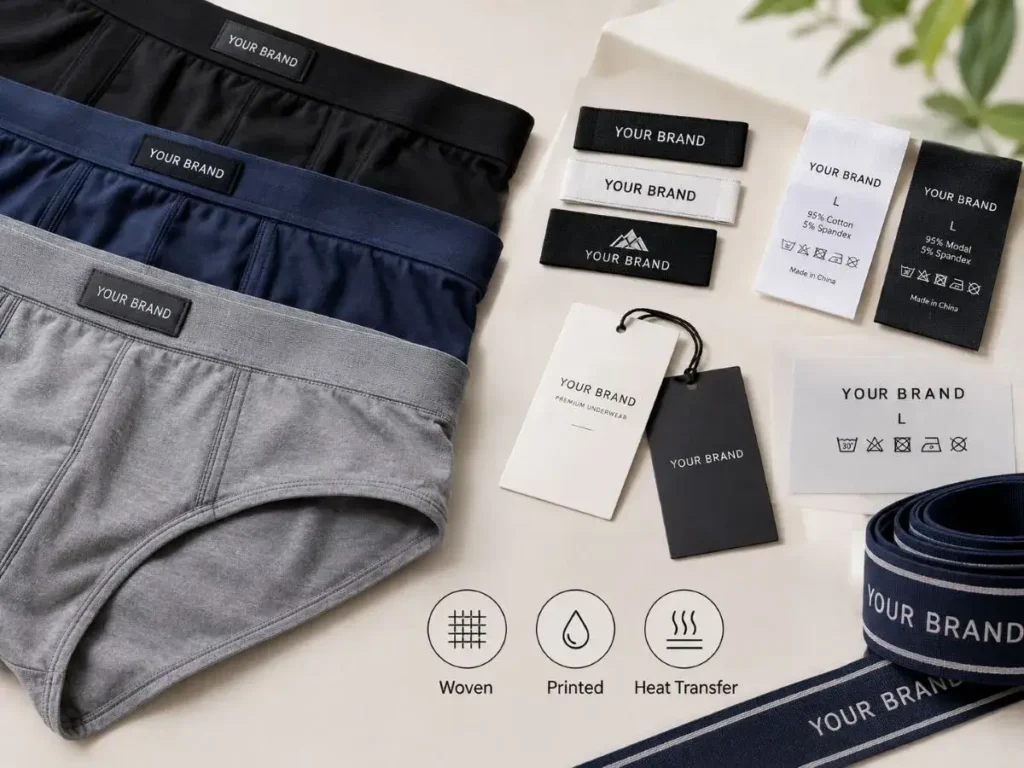
Labels are a small part of an underwear garment, but they can have a major impact on comfort, branding, product presentation, and customer experience. For brands developing a custom underwear collection, choosing the right labeling method is more than a visual decision. The label needs to work with the fabric, garment construction, washing requirements, skin contact, and overall brand positioning.
The most common options for custom underwear labels include woven labels, printed labels, and heat transfer labels. Each method has different advantages in terms of appearance, durability, flexibility, comfort, and production requirements.
This guide explains the differences between these three options and how apparel brands can choose the right label solution for their custom underwear products.
Why Custom Underwear Labels Matter
In a custom underwear program, labels can perform several functions at the same time. They may communicate your brand identity, provide size information, display care instructions, identify fiber composition, and meet product labeling requirements for your target market.
Unlike labels on outerwear, underwear labels may come into frequent contact with sensitive skin. This means the labeling method should be evaluated not only for visual appearance but also for softness, edge construction, thickness, and placement.
Labels should also be considered as part of the overall product development process. Fabric selection, garment construction, waistbands, branding, and labeling need to work together. Our guide to premium custom underwear engineering provides a broader look at technical considerations when developing underwear for a commercial brand.
What Are the Main Types of Custom Underwear Labels?
For most custom underwear projects, the three main labeling options are:
- Woven labels – branding and information are woven directly into the label.
- Printed labels – text, logos, or care information are printed onto a suitable label material or directly onto the garment.
- Heat transfer labels – graphics or product information are transferred onto the garment using controlled heat and pressure.
The right choice depends on the type of information required, the desired visual effect, the fabric, the position of the label, production volume, and the comfort requirements of the product.
1. Woven Underwear Labels
Woven labels are made by weaving threads into a dedicated label to create logos, brand names, size information, or other details. They are commonly used when a brand wants a distinct textile appearance or a more traditional branded label.
Advantages of Woven Labels
- Distinctive woven appearance
- Good visual definition for brand logos
- Suitable for premium branding
- Can include brand names, sizes, and other information
- Can be produced in different colors and designs
Potential Considerations
The label construction, edge finishing, thickness, and attachment method should be carefully considered for underwear because the label may come into contact with the wearer’s skin. A woven label that works well on outerwear may not automatically be the most comfortable option for intimate apparel.
Woven labels can be particularly suitable for brands that prioritize visible textile branding, provided the label construction is compatible with the garment and comfort requirements.
2. Printed Underwear Labels
Printed labels use ink or other printing processes to place branding or product information onto a suitable label material or directly onto the garment.
Printed solutions can provide a clean and relatively lightweight appearance and can be useful for information such as:
- Brand names
- Size information
- Fiber composition
- Care instructions
- Product identification
For underwear brands, printed labeling can also be considered when minimizing physical label thickness is an important part of the product concept.
Advantages of Printed Labels
- Clean and simple appearance
- Flexible for detailed information
- Can reduce the need for a thicker sewn label
- Suitable for minimalist branding
- Can work well with different product information requirements
Durability should still be tested before bulk production. The brand should evaluate how the print performs after repeated washing, stretching, and normal wear.
3. Heat Transfer Underwear Labels
Heat transfer labels use heat and pressure to apply a printed graphic, logo, size marking, or other information directly onto the garment or onto a compatible transfer surface.
This option is often considered when brands want a low-profile labeling solution with minimal physical construction. Because the design can sit directly on the garment, heat transfer labeling can help create a cleaner inner surface.
Advantages of Heat Transfer Labels
- Low-profile construction
- Can reduce physical label bulk
- Suitable for minimalist and tagless-style products
- Can include logos, sizes, or care information
- Works well for certain stretch fabrics and underwear constructions
However, heat transfer performance depends heavily on the transfer material, application temperature, pressure, curing, garment fabric, and production process. Proper testing is important before approving the method for bulk production.
Woven vs. Printed vs. Heat Transfer Underwear Labels
The three options can all be suitable for custom underwear, but they serve somewhat different product needs.
| Label Type | Appearance | Comfort Considerations | Typical Use | Key Consideration |
|---|---|---|---|---|
| Woven | Textile, structured, branded | Depends on label thickness and edge construction | Premium brand identification | Construction and skin contact |
| Printed | Clean and flexible | Generally low-profile | Branding, size, care information | Print durability |
| Heat Transfer | Minimal and integrated | Low-profile when properly applied | Tagless-style branding and information | Adhesion and wash performance |
How to Choose the Right Label for Your Underwear Brand
Instead of choosing a label based only on its appearance, evaluate it according to the complete product requirements.
1. Consider Skin Comfort
Comfort is one of the most important factors for underwear. Labels should not create unnecessary stiffness, rough edges, excessive thickness, or friction.
When evaluating a label option, consider its position and whether it will sit against the skin during everyday wear. In some products, a printed or heat transfer solution may be more suitable because it creates a lower-profile inner surface.
2. Match the Label to the Fabric
Different underwear fabrics behave differently. Stretch fabrics can move significantly during wear, so the label solution needs to accommodate the movement of the garment.
Fabric composition, GSM, stretch, recovery, and finishing can all influence how a label performs. Brands developing custom underwear should therefore evaluate the label together with the final fabric rather than approving labels separately.
For more information about selecting the right material, see: How to Choose the Best Fabric for Custom Underwear .
You can also read our more technical guide: How to Choose Fabric for Custom Boxer Briefs: A B2B Sourcing Guide .
3. Consider Your Brand Positioning
Labeling can contribute to how your underwear brand is perceived. A premium collection may require a more refined branding presentation, while a minimalist basics brand may prefer a discreet printed or heat transfer solution.
Luxury and premium underwear brands should consider the relationship between labels, fabric quality, waistband branding, packaging, and garment construction so that all of the product details communicate a consistent brand identity.
4. Consider the Information You Need to Display
Not every label needs to display the same information. Depending on your product and target market, you may need to communicate:
- Brand name or logo
- Size
- Fiber composition
- Care instructions
- Country of origin
- Product identification
Your manufacturer should help determine which information belongs on the label and how it should be incorporated into the garment. Always confirm labeling requirements for the market where the product will be sold.
Custom Underwear Labels and Waistband Branding
Labels are only one part of underwear branding. For many brands, the waistband is an equally important branding element because it is visible when the product is worn.
A brand may combine an inner label with a custom waistband logo to create a more complete product identity. Depending on the design, waistband branding can use woven jacquard construction or printed methods.
Our comparison of Jacquard vs. Printed Elastic Waistband explains how these two waistband branding methods differ in appearance, construction, MOQ, and production considerations.
This combination is particularly useful for brands developing recognizable private label underwear collections.
Custom Labels for Private Label Underwear
For a private label underwear project, branding should be considered across the entire product rather than only the inner label.
A complete private label underwear package may include:
- Custom garment label
- Size label
- Care information
- Custom waistband
- Hangtag
- Barcode or product identification
- Custom packaging
The combination of these elements can create a consistent brand experience from the garment itself to the retail packaging.
Beyson Apparel’s custom underwear manufacturing service supports private label branding, custom waistbands, labels, packaging, and product development for B2B customers. You can also review our guide to choosing a custom underwear manufacturer when evaluating a production partner.
What Should You Send to a Manufacturer for Custom Underwear Labels?
Providing clear specifications can reduce mistakes during sampling and bulk production.
When requesting custom underwear labels, prepare the following information where applicable:
- Brand logo or artwork
- Label dimensions
- Label position
- Color references
- Font specifications
- Size information
- Care instructions
- Fiber composition
- Country-of-origin information
- Preferred label construction
- Estimated order quantity
If you already have a product design or technical specification, provide the label requirements as part of the complete product development package. This helps the manufacturer evaluate how the label interacts with the fabric and garment construction.
Test Custom Underwear Labels During Sampling
Labels should be tested during the sample stage rather than approved only from artwork or digital previews.
During sampling, evaluate:
- Label size and position
- Skin comfort
- Print or weave clarity
- Attachment quality
- Stretch compatibility
- Wash performance
- Color stability
- Overall appearance
This is particularly important when developing underwear because the finished garment may be stretched repeatedly during wear and washing.
Before moving into bulk production, brands should approve a final sample containing the actual materials and branding components. Our underwear manufacturing sample guide explains what B2B buyers should prepare when requesting and evaluating custom samples.
Common Mistakes When Choosing Underwear Labels
Choosing Based Only on Appearance
A label may look attractive in a design file but feel uncomfortable when attached to an actual garment. Always evaluate the physical sample.
Ignoring Stretch
Underwear fabrics can stretch significantly during use. The label and attachment method need to work with that movement rather than restricting the garment.
Using the Same Label for Every Product
A labeling method that works well on cotton underwear may not be ideal for lightweight modal or highly stretchable fabrics. Different collections may require different label solutions.
Skipping Wash Testing
Underwear is washed frequently, so durability should be evaluated before production. Test the label under conditions that reflect expected product use.
Ignoring Brand Consistency
Your label should work visually with your waistband, packaging, colors, typography, and overall brand identity. A premium product can lose visual consistency when these elements are developed independently.
Which Custom Underwear Label Should Your Brand Choose?
| Brand Requirement | Possible Label Direction |
|---|---|
| Premium textile branding | Woven label |
| Minimalist inner branding | Printed label |
| Low-profile or tagless concept | Heat transfer label |
| Detailed product information | Printed or heat transfer solution, depending on garment and requirements |
| Highly branded underwear collection | Combine inner labeling with custom waistband branding |
There is no universal solution for every underwear product. The correct labeling method depends on the garment fabric, construction, branding strategy, target market, and required product information.
Final Thoughts
Custom underwear labels are an important part of product development because they combine branding, product information, comfort, and garment functionality.
Woven labels can provide a distinctive textile appearance, printed labels can offer a clean and flexible solution, while heat transfer labels can create a low-profile approach for brands looking for integrated or tagless-style branding.
The best option should be evaluated together with the underwear fabric, stretch performance, construction, branding requirements, and washing conditions.
Working with an experienced custom underwear manufacturer can also make it easier to test different labeling methods during product development and finalize the right solution before bulk production.
Need Custom Underwear Labels for Your Brand?
Beyson Apparel supports custom underwear development with private labeling, printed and heat transfer branding, custom waistbands, fabric sourcing, sampling, packaging, and OEM/ODM production.
Share your logo, label requirements, artwork, or product specifications with our team to discuss the right labeling solution for your underwear collection.
* This article was written by the manufacturing team of Beyson Apparel. We are a clothing ODM/OEM factory with 15+ years of experience, covering products such as Underwear, T-shirt, Polo Shirts, Hoodies, Pajamas, Shorts and more. Direct inquiry, reply within 12 hours *