
 Call us now:

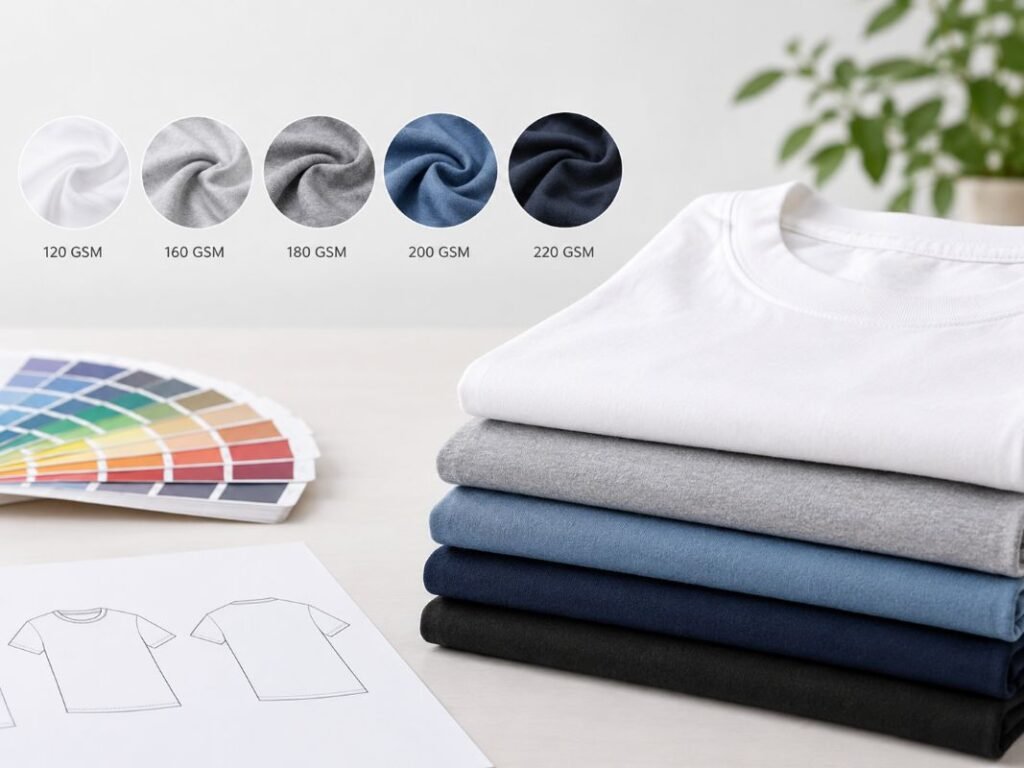
Choosing the right T-shirt GSM is an important decision for clothing brands developing a custom T-shirt collection. Fabric weight affects how a T-shirt feels, drapes, breathes, and holds its shape. It can also influence production costs, printing results, and the overall perception of product quality.
However, a higher GSM does not automatically mean a better T-shirt. Lightweight fabrics can be ideal for summer collections, while heavyweight fabrics are often preferred for oversized streetwear and structured premium basics. The best choice depends on your target customers, product positioning, climate, and design requirements.
In this guide, we explain what T-shirt GSM means, compare common fabric weight ranges, and show you how to select the right GSM for your custom T-shirt brand.
1. What Does GSM Mean in T-Shirts?
GSM stands for grams per square meter. It measures the weight of a fabric over a standard area of one square meter.
In T-shirt manufacturing, GSM is commonly used to describe fabric weight. It helps brands compare material specifications and communicate their preferences to manufacturers.
Generally, fabrics with a lower GSM feel lighter, while fabrics with a higher GSM tend to feel heavier and may provide more structure. However, GSM alone cannot determine the exact thickness, softness, breathability, or durability of a garment.
Why Does T-Shirt GSM Matter?
Fabric weight can influence several important product characteristics:
- Comfort: Lightweight fabrics may feel less heavy in warm weather, while heavier fabrics can provide a more substantial feel.
- Drape: Fabric weight and construction influence how a T-shirt hangs on the body.
- Structure: Heavyweight fabrics are often selected for oversized silhouettes and boxy fits.
- Opacity: Heavier fabrics may provide better coverage, although fiber color, knit structure, and finishing also matter.
- Printing: Fabric surface and construction can affect print appearance, hand feel, and performance.
- Cost: Higher fabric consumption by weight can increase material costs, but the final price also depends on yarn quality, finishing, construction, and order quantity.
For brands developing a new collection, GSM should be treated as one part of the complete fabric specification rather than the only indicator of quality.
2. T-Shirt GSM Chart: Lightweight vs. Midweight vs. Heavyweight
Custom T-shirts are available in a wide range of fabric weights. The following chart provides a practical starting point for choosing a suitable GSM for different product categories.
| Fabric Weight | General Characteristics | Suitable Applications |
|---|---|---|
| 120–150 GSM | Very lightweight, flexible, and suitable for light garments | Summer T-shirts, lightweight promotional apparel, warm-weather basics |
| 150–180 GSM | Lightweight with a balance of comfort and coverage | Everyday T-shirts, casual basics, travel apparel |
| 180–220 GSM | Midweight, versatile, and suitable for many everyday designs | Private label T-shirts, retail basics, versatile lifestyle collections |
| 220–260 GSM | Heavier feel with potential for a more structured appearance | Premium basics, relaxed-fit T-shirts, selected streetwear styles |
| 260 GSM and above | Heavyweight fabric often used for bold silhouettes and substantial garments | Heavyweight streetwear, boxy T-shirts, statement pieces |
These ranges are general guidelines, not fixed industry standards. Different manufacturers may classify fabric weights differently, and two fabrics with the same GSM can feel very different.
Before selecting a fabric, consider its composition, yarn quality, knit structure, finishing, and intended garment construction.
3. What GSM Is Best for Different T-Shirt Styles?
The ideal T-shirt GSM depends on how the garment will be worn and how your brand wants the product to look and feel.
Lightweight T-Shirts: 120–160 GSM
Lightweight T-shirts are often suitable for warm climates, summer collections, and products designed to feel light on the body.
Potential advantages include:
- A lighter wearing experience.
- Suitability for warm-weather collections.
- Lower fabric weight per garment when other specifications are comparable.
- Compatibility with selected relaxed and casual designs.
However, very lightweight fabrics may be more transparent, less structured, or more prone to showing imperfections depending on the material and construction.
Best for: Summer basics, lightweight casualwear, and promotional T-shirts where a lighter feel is a priority.
Midweight T-Shirts: 160–220 GSM
Midweight fabrics offer a versatile option for many everyday T-shirt collections. They can provide a useful balance between comfort, coverage, structure, and cost.
This range is worth considering if your brand needs a T-shirt suitable for regular wear rather than a highly specialized lightweight or heavyweight design.
Midweight T-shirts can work well for:
- Private label clothing brands.
- Everyday cotton T-shirts.
- Casual lifestyle collections.
- Corporate apparel and selected promotional products.
- Retail basics with custom labels and branding.
Best for: Brands looking for a versatile T-shirt suitable for a broad customer base.
Heavyweight T-Shirts: 220–280 GSM
Heavyweight T-shirts are commonly associated with premium basics, oversized silhouettes, and streetwear collections.
The additional fabric weight can contribute to a more substantial hand feel and a structured appearance. Depending on the pattern and fabric construction, heavyweight material can also help a garment maintain a more defined silhouette.
Consider heavyweight fabrics when your product concept requires:
- A substantial, premium-feeling garment.
- A boxy or oversized silhouette.
- A more structured appearance.
- A fabric surface suited to a particular graphic or design concept.
Heavyweight fabric is not automatically more durable or comfortable. The final result depends on fiber quality, yarn construction, finishing, sewing quality, and care.
Best for: Streetwear labels, oversized T-shirts, and brands that emphasize fabric weight and structure.
Extra-Heavyweight T-Shirts: 280 GSM and Above
Extra-heavyweight T-shirts can create a distinctive product with a substantial feel. They are most appropriate when the intended design and customer expectations justify the additional weight.
Before choosing this range, consider the local climate, garment drape, production cost, and whether customers will find the finished product comfortable for its intended use.
Best for: Selected premium streetwear and statement garments where substantial fabric weight is part of the product identity.
4. What Is the Best GSM for Different Clothing Brands?
Instead of choosing a GSM simply because it is popular, start with your brand positioning and target customer.
| Brand Type | Suggested Starting Range | Key Consideration |
|---|---|---|
| Affordable basics | 150–190 GSM | Balance fabric cost, comfort, coverage, and repeat-order consistency. |
| Premium basics | 180–240 GSM | Focus on softness, surface quality, construction, and fit. |
| Streetwear brands | 220–300 GSM or above | Evaluate silhouette, structure, drape, and the intended oversized fit. |
| Summer apparel | 120–170 GSM | Prioritize a lightweight feel and suitable opacity. |
| Corporate and promotional apparel | 150–200 GSM | Consider comfort, intended use, printing method, and budget. |
These recommendations are starting points rather than strict rules. A premium T-shirt can be lightweight, and a heavyweight T-shirt can be inexpensive. Product quality depends on the complete specification, not GSM alone.
5. How Fabric Composition Affects T-Shirt GSM
GSM tells you how much a fabric weighs per square meter, but it does not tell you what the fabric is made of. Two fabrics with the same weight may have different softness, stretch, moisture management, and surface characteristics.
When developing custom T-shirts, evaluate fabric composition alongside GSM.
100% Cotton
Cotton is widely used in everyday T-shirts because of its familiar hand feel and versatility. Different cotton yarn qualities and fabric constructions can produce very different results at the same GSM.
Combed Cotton
Combed cotton is processed to remove many shorter fibers and impurities before spinning. Depending on yarn quality and fabric construction, it can offer a smoother surface and a refined hand feel.
Cotton-Polyester Blends
Cotton-polyester blends combine different fiber characteristics. Depending on the blend ratio and fabric construction, they can offer useful options for durability, shape retention, drying performance, and cost control.
Stretch Blends
Adding elastane or another stretch fiber can change the fabric’s elasticity and recovery. These properties are especially relevant for fitted T-shirts and designs that require additional flexibility.
For a more detailed comparison of materials, read our guide to choosing fabric for custom T-shirts.
6. Does Higher T-Shirt GSM Mean Better Quality?
No. Higher GSM means more fabric weight per square meter, but it does not automatically mean better quality.
A well-made 160 GSM T-shirt can be more suitable for its intended purpose than a poorly constructed 240 GSM T-shirt.
When evaluating fabric quality, consider the following factors:
- Fiber quality: The characteristics of the raw material and yarn.
- Yarn construction: How the yarn is produced can influence the fabric’s surface and performance.
- Knit structure: The construction affects stretch, drape, and other physical properties.
- Finishing: Treatments can influence softness, appearance, shrinkage, and other characteristics.
- Dimensional stability: Shrinkage and shape retention should be evaluated for the intended product.
- Color performance: Color consistency and colorfastness matter for branded apparel.
- Garment construction: Stitching, seams, neckline construction, and finishing all affect the finished T-shirt.
For B2B buyers, the best approach is to establish measurable specifications and approve a physical sample before bulk production.
7. How T-Shirt GSM Affects Manufacturing Cost
Fabric weight can influence the material cost of a custom T-shirt. When other factors remain comparable, a heavier fabric generally uses more fabric mass per unit area.
However, GSM is only one component of the final manufacturing cost.
Other important factors include:
- Fiber composition and yarn quality.
- Fabric construction and finishing.
- Garment size, pattern, and fabric consumption.
- Order quantity and color breakdown.
- Printing, embroidery, and other customization.
- Labels, trims, and packaging.
- Sampling, testing, and quality requirements.
For example, two 200 GSM cotton T-shirts may have different costs because they use different yarn qualities, finishing processes, patterns, or customization methods.
When requesting quotations, provide the intended GSM, fabric composition, garment measurements, and customization details. This makes supplier quotations easier to compare on a like-for-like basis.
Learn more about the factors affecting custom T-shirt bulk order costs.
8. How GSM Affects T-Shirt Printing
If your collection includes printed graphics, consider the relationship between fabric weight, surface texture, and printing method.
GSM alone does not determine whether a fabric is suitable for printing. Fabric composition, knit structure, surface smoothness, color, and the printing process are also important.
Before confirming your specifications, consider:
- Print appearance: Check whether the fabric surface supports the desired level of detail.
- Print feel: Evaluate whether the finished graphic feels appropriate for the garment.
- Stretch: For stretch fabrics, confirm that the printing method is suitable for the material.
- Color accuracy: Approve the print on the intended fabric and garment color.
- Wash performance: Test the finished garment using an appropriate care and wash procedure.
Do not assume that heavyweight fabric is always better for printing or that lightweight fabric cannot support detailed artwork. The best result depends on the combination of material, artwork, ink system, and production process.
Explore the differences between screen printing and DTG printing for custom T-shirts before finalizing your production specifications.
9. How to Choose the Right GSM for Your Custom T-Shirt
Use the following steps to narrow down the right fabric weight for your collection.
Step 1: Define Your Product Positioning
Decide whether your T-shirt is intended for affordable everyday wear, premium basics, streetwear, promotional use, or another market segment.
This helps establish an initial GSM range and the quality characteristics you should prioritize.
Step 2: Consider Your Target Market and Climate
Customers in warm climates may prefer lighter garments, while some premium streetwear collections emphasize a more substantial fabric feel. These are general preferences, so consider your specific customer research and product concept.
Step 3: Confirm the Fit and Silhouette
A regular-fit T-shirt and an oversized boxy T-shirt may require different fabric characteristics.
Consider how the fabric will drape across the shoulders, sleeves, chest, and hem. A heavyweight fabric may create a more structured silhouette, while a lighter fabric may produce a softer drape.
Step 4: Select the Fabric Composition
Choose the fiber composition and fabric construction that match your intended comfort, appearance, performance, and cost requirements.
Once you have shortlisted the material, confirm the target GSM with your manufacturer.
Step 5: Request Fabric Swatches and Garment Samples
Numbers alone cannot fully communicate how a fabric feels or behaves. Request swatches or samples so you can compare softness, thickness, drape, stretch, opacity, and color.
Where possible, compare fabrics with similar compositions and finishes to understand the effect of GSM more accurately.
Step 6: Test Before Bulk Production
Evaluate the sample against your intended specifications. Depending on the product, this may include measurements, shrinkage, colorfastness, print quality, and other relevant performance checks.
Approve the final specifications and pre-production sample before authorizing bulk manufacturing.
If you need help evaluating a supplier’s sampling process, read our custom apparel sampling guide.
10. What to Tell Your T-Shirt Manufacturer About GSM
When contacting a manufacturer, avoid describing your fabric only as “thick,” “thin,” or “premium.” These terms can mean different things to different suppliers.
Instead, provide a clear product brief containing the following information:
- Target GSM: Your preferred weight or acceptable range.
- Fabric composition: For example, 100% cotton or a cotton-polyester blend.
- Fabric construction: The preferred knit or fabric type, if known.
- Hand feel: Soft, crisp, smooth, compact, or another clearly described preference.
- Fit: Regular, relaxed, oversized, or boxy.
- Color: Required fabric colors and any relevant color references.
- Printing or embroidery: Artwork, placement, and preferred method, if known.
- Order quantity: Estimated quantity per style and color.
- Target price: Your budget or intended price positioning, if available.
If you are unsure which GSM to choose, explain the product concept and request recommendations based on your target market and budget.
When evaluating potential partners, our guide to finding a reliable T-shirt manufacturer in China can help you understand what to look for.
11. Common Mistakes When Choosing T-Shirt GSM
Choosing the Highest GSM Available
Heavyweight fabric is not automatically the best choice. Excessive weight may make a garment less suitable for warm weather or a lightweight product concept.
Ignoring Fabric Composition
Two fabrics with the same GSM can differ in softness, stretch, breathability, and durability. Always evaluate the complete material specification.
Comparing GSM Without Checking Construction
Knitting structure, yarn characteristics, and finishing can change how a fabric feels and performs. Ask for physical swatches when comparing suppliers.
Skipping Sample Approval
A fabric specification on paper cannot replace a physical sample. Test the garment before approving bulk production.
Focusing Only on Fabric Cost
The cheapest fabric may not provide the right hand feel, fit, appearance, or performance for your brand. Evaluate the complete product and its intended market.
Frequently Asked Questions About T-Shirt GSM
What is a good GSM for a T-shirt?
A range of approximately 180–220 GSM is a useful starting point for many everyday and private label T-shirts. However, lighter fabrics may be better for summer garments, while heavyweight fabrics may suit streetwear and structured designs.
Is 180 GSM good for a T-shirt?
Yes. A 180 GSM T-shirt can be suitable for everyday wear, depending on the fabric composition, construction, and finishing. It can offer a practical balance between weight and versatility for many basic T-shirt collections.
Is 200 GSM good for premium T-shirts?
Yes. A 200 GSM fabric can work well for premium T-shirts, but GSM alone does not establish premium quality. Yarn quality, fabric finishing, construction, fit, and workmanship are also important.
Is 240 GSM too heavy for a T-shirt?
Not necessarily. A 240 GSM fabric can be suitable for heavyweight basics, relaxed-fit garments, and streetwear. Whether it feels too heavy depends on the fabric construction, climate, fit, and intended use.
Does higher GSM mean better durability?
Not automatically. Durability also depends on fiber quality, yarn construction, fabric structure, stitching, finishing, and care. A heavier fabric may be appropriate for some products, but it is not a universal indicator of longer garment life.
What is the difference between GSM and fabric thickness?
GSM measures fabric weight per square meter, while thickness refers to the physical distance between the fabric’s surfaces. The two can be related, but they are not interchangeable because fiber density, yarn construction, and fabric structure also affect thickness.
Conclusion: Choose the Right T-Shirt GSM for Your Brand
The best T-shirt GSM depends on your product positioning, target customer, climate, fit, and fabric preferences. Lightweight fabrics can suit summer basics, midweight fabrics offer versatility for everyday collections, and heavyweight fabrics can support structured silhouettes and streetwear designs.
Rather than selecting fabric based on GSM alone, evaluate the complete specification, request samples, and confirm the final garment’s performance before bulk production.
Developing a custom T-shirt collection? Beyson Apparel supports B2B brands with OEM and ODM apparel manufacturing services. Share your target GSM, preferred fabric, design, branding requirements, and order quantity to discuss suitable production options.
Explore Beyson Apparel’s custom apparel manufacturing services and contact our team to discuss your next T-shirt project.
Email: sales@beysonapparel.com
* This article was written by the manufacturing team of Beyson Apparel. We are a clothing ODM/OEM factory with 15+ years of experience, covering products such as Underwear, T-shirt, Polo Shirts, Hoodies, Pajamas, Shorts and more. Direct inquiry, reply within 12 hours *