
 Call us now:

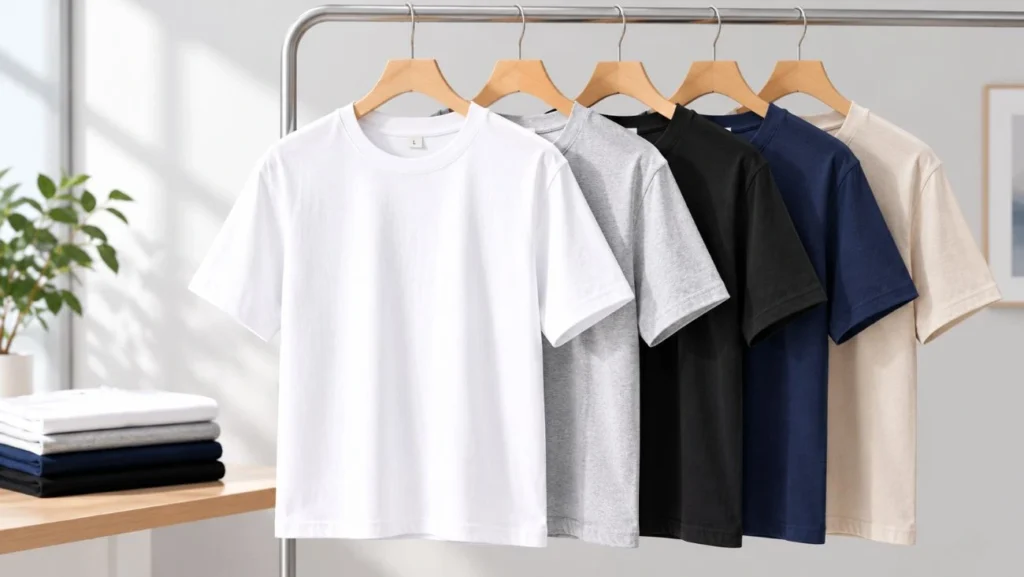
Finding a reliable T-shirt manufacturer in China can help clothing brands reduce production costs, improve product quality, and build a stable supply chain. However, choosing the right factory is not simply about finding the lowest price.
China has thousands of garment manufacturers, trading companies, and apparel suppliers. Some specialize in high-volume basic T-shirts, while others focus on OEM, ODM, private label, or custom apparel production. The challenge is identifying a manufacturer that can consistently meet your requirements for quality, customization, MOQ, production capacity, and delivery.
If you are looking for a custom T-shirt manufacturer in China, this guide explains what to check before choosing a supplier and how to avoid common sourcing mistakes.
1. Define Your T-Shirt Manufacturing Requirements
Before contacting manufacturers, clearly define what you want to produce.
A professional supplier will usually ask about:
- T-shirt style and design
- Fabric composition
- Fabric weight or GSM
- Colors
- Size range
- Printing or embroidery
- Labels and branding
- Packaging
- Quantity
- Target market
- Delivery requirements
For example, a brand looking for 100% cotton heavyweight T-shirts has very different requirements from a company producing lightweight promotional T-shirts.
The more detailed your specifications are, the easier it is for a manufacturer to provide an accurate quotation.
If you are still deciding which fabric to use, see our guide on How to Choose Fabric for Custom T-Shirts: GSM, Cotton, and Blends.
2. Look for a Manufacturer With Real T-Shirt Production Experience
Not every company that advertises itself as a “T-shirt manufacturer” actually operates its own production facility.
Some suppliers are trading companies that outsource production to other factories. This is not necessarily a problem, but it can make quality control, communication, and production scheduling more complicated.
When evaluating a T-shirt manufacturer in China, ask about:
- Factory location
- Production facilities
- Manufacturing experience
- Number of production workers
- Equipment
- Monthly production capacity
- Quality control procedures
- Products currently being manufactured
A factory with established T-shirt production experience should be able to explain its manufacturing process clearly.
For B2B buyers, visiting the factory—either in person or through a virtual factory tour—can also help verify whether the supplier’s capabilities match its claims.
3. Check Whether They Offer OEM and ODM Services
If you are building your own clothing brand, you may need more than basic wholesale T-shirts.
A reliable custom T-shirt manufacturer should ideally support OEM or ODM production.
OEM T-Shirt Manufacturing
With OEM production, you normally provide your own design, specifications, tech pack, branding requirements, and other product details.
The manufacturer then produces the T-shirts according to your specifications.
OEM is often suitable for established brands that already have their product designs and technical specifications.
ODM T-Shirt Manufacturing
ODM manufacturing provides more development support from the manufacturer.
Depending on the supplier, this may include:
- Product design assistance
- Fabric recommendations
- Pattern development
- Sample development
- Construction recommendations
- Custom branding
- Packaging development
ODM can be particularly useful for startups and brands that have a product concept but need manufacturing expertise to turn it into a finished product.
4. Evaluate Fabric Sourcing Capabilities
Fabric is one of the most important factors affecting T-shirt quality.
A manufacturer should be able to explain the differences between different fabric options and recommend materials based on your target product.
Common T-shirt fabrics include:
- 100% cotton
- Combed cotton
- Organic cotton
- Cotton-polyester blends
- Cotton-elastane blends
- Polyester
- Modal and other specialty fabrics
You should also consider fabric weight.
For example:
- Lightweight fabrics can be suitable for summer T-shirts.
- Medium-weight fabrics are commonly used for everyday T-shirts.
- Heavyweight fabrics are often preferred for premium or streetwear products.
Do not choose a fabric simply because it has a lower price. Fabric quality can significantly affect hand feel, shrinkage, durability, color retention, and the final appearance of the garment.
For a more detailed explanation, read our guide How to Choose Fabric for Custom T-Shirts: GSM, Cotton, and Blends.
5. Ask About MOQ Before Requesting a Final Quote
MOQ means Minimum Order Quantity.
Different T-shirt manufacturers in China may have very different MOQ requirements.
For example, a factory may set different minimum quantities based on:
- Style
- Color
- Size
- Fabric
- Printing method
- Embroidery
- Custom labels
- Packaging
A supplier may advertise a low MOQ but apply different requirements once you request custom fabrics, colors, or packaging.
Therefore, always ask:
What is the MOQ per style and color?
Also ask whether the MOQ applies separately to each color and size.
For growing brands, choosing a manufacturer with a reasonable MOQ can reduce inventory risk and make it easier to test new products.
If MOQ is one of your main concerns, you can also read our guide Custom T Shirt Manufacturer with Low MOQ: A Guide for Growing Apparel Brands.
6. Always Request Samples Before Bulk Production
Never place a large production order based only on product photos or a supplier’s quotation.
Samples allow you to evaluate:
- Fabric quality
- Weight and GSM
- Fit
- Measurements
- Stitching
- Printing quality
- Embroidery
- Color
- Label placement
- Packaging
- Overall workmanship
A professional manufacturer should have a clear sample development and approval process.
For custom apparel projects, the normal process may include:
- Product specifications
- Tech pack review
- Initial sample
- Fit adjustments
- Revised sample
- Pre-production sample
- Sample approval
- Bulk production
It is important to approve the final sample before bulk production begins.
For a detailed explanation of the process, see our Custom Apparel Sampling Guide.
7. Evaluate the Manufacturer's Quality Control System
Quality control is one of the biggest differences between a reliable factory and an unreliable supplier.
Ask the manufacturer how quality is controlled during production.
A professional quality control process may include:
Pre-Production Inspection
Before production begins, the factory checks materials, specifications, colors, trims, and production requirements.
Inline Inspection
During production, workers or quality control personnel inspect garments to identify problems before large quantities are completed.
Final Inspection
Finished T-shirts are inspected before packing and shipment.
Important quality factors may include:
- Measurements
- Stitching
- Fabric defects
- Color consistency
- Printing
- Embroidery
- Labels
- Packaging
- Quantity
A reliable supplier should be willing to explain its quality control procedures instead of simply saying that it provides “high quality.”
8. Verify Certifications and Compliance
If you sell T-shirts in the United States, Europe, Australia, or other international markets, compliance may be an important part of supplier selection.
Depending on your product and target market, you may need to consider certifications or standards related to:
- Textile safety
- Chemical restrictions
- Environmental practices
- Social compliance
- Factory working conditions
- Material sourcing
Do not assume that every certificate applies to every product.
Ask the manufacturer which certifications its factory and materials currently hold, and request documentation when necessary.
For example, some apparel manufacturers may work with standards such as OEKO-TEX, GOTS, BSCI, or other relevant certifications depending on the project.
9. Compare More Than the Unit Price
One of the most common mistakes when sourcing T-shirts from China is choosing the cheapest quotation.
A $3.00 T-shirt is not necessarily cheaper than a $3.30 T-shirt if the first supplier has:
- Higher defect rates
- Poorer fabric
- Longer lead times
- More sample revisions
- Inconsistent sizing
- Weak communication
- Higher shipping costs
- Poor quality control
Instead of comparing only the unit price, compare the total manufacturing value.
A useful supplier comparison checklist includes:
| Factor | What to Check |
|---|---|
| Product quality | Fabric, stitching, fit and workmanship |
| MOQ | MOQ per style and color |
| Sampling | Sample cost, timeline and revisions |
| Customization | Fabric, color, logo, labels and packaging |
| Production capacity | Monthly production capability |
| Quality control | Inspection procedures |
| Certifications | Relevant factory and material certifications |
| Lead time | Sampling and bulk production |
| Communication | Response speed and technical understanding |
| Shipping | Available shipping and export support |
| Price | Total landed manufacturing cost |
This approach helps you choose a long-term manufacturing partner rather than simply finding the lowest quotation
10. Evaluate Communication Before Placing an Order
Good communication is especially important for custom apparel.
Your manufacturer needs to understand technical details such as:
- Measurements
- Fabric specifications
- Pantone colors
- Artwork
- Printing positions
- Stitching requirements
- Labels
- Packaging
- Shipping requirements
If a supplier takes several days to answer basic questions or repeatedly misunderstands your specifications during the quotation stage, problems may become more serious after production begins.
Pay attention to whether the supplier:
- Answers questions clearly
- Understands your product
- Provides complete quotations
- Identifies potential problems
- Gives realistic lead times
- Communicates production updates
A manufacturer that communicates well before the order is usually easier to manage during sampling and bulk production.
11. Check Production Capacity and Lead Times
Production capacity becomes particularly important when your brand starts growing.
A small factory may be suitable for product testing but struggle when your order volume increases.
Ask the manufacturer:
- How many T-shirts can you produce per month?
- How many production lines are available?
- What is the typical bulk production lead time?
- How do you handle peak seasons?
- Can you scale production for larger orders?
You should also separate sampling lead time from bulk production lead time.
The total timeline may include:
Design → Sampling → Sample Approval → Material Preparation → Bulk Production → Quality Inspection → Packing → Shipping
A reliable supplier should be able to provide a realistic production schedule rather than simply promising “fast delivery.”
For more information about how modern manufacturing technology can improve output and lead times, see our guide on apparel manufacturing capacity.
12. Consider Whether the Manufacturer Can Support Your Brand Long-Term
The best T-shirt manufacturer is not necessarily the factory with the lowest initial quotation.
Instead, look for a supplier that can grow with your business.
For example, you may initially order basic T-shirts, but later need:
- Custom fabrics
- More colors
- Larger quantities
- Private labels
- Custom packaging
- Different T-shirt styles
- Polo shirts
- Hoodies
- Other apparel categories
Working with a manufacturer that provides multiple apparel categories can simplify supply chain management as your brand expands.
Beyson Apparel, for example, provides OEM and ODM manufacturing across T-shirts, underwear, polo shirts, hoodies, pajamas, and other knitted garments, allowing B2B buyers to develop multiple product categories with one manufacturing partner.
If you are also planning to expand into polo shirts, you can learn more about working with a custom polo shirt manufacturer.
13. Ask These Questions Before Choosing a China T-Shirt Manufacturer
Before moving forward, ask potential suppliers the following questions:
- Do you operate your own factory?
- Where is your factory located?
- How many years have you manufactured T-shirts?
- What is your monthly production capacity?
- What is your MOQ per style and color?
- Can you provide custom fabrics?
- Can you produce according to a tech pack?
- Do you offer OEM and ODM services?
- Can you provide samples before bulk production?
- How many sample revisions are included?
- What quality control procedures do you use?
- What certifications are available?
- What is the estimated production lead time?
- Can you provide custom labels and packaging?
- Can you support international shipping?
The answers to these questions can help you quickly identify whether a supplier is suitable for your project.
14. Common Mistakes When Choosing a T-Shirt Manufacturer in China
Choosing Based Only on Price
The cheapest quotation may come with compromises in fabric, workmanship, quality control, or communication.
Skipping the Sample Stage
Never assume that the bulk product will match the photos shown online.
Not Confirming MOQ
Always clarify whether MOQ applies per style, color, or total order quantity.
Ignoring Fabric Specifications
“100% cotton” alone does not tell you everything about a T-shirt. GSM, yarn quality, finishing, shrinkage, and construction also matter.
Not Checking Quality Control
Ask how defects are identified and handled before shipment.
Failing to Confirm Production Timelines
Make sure sampling and bulk production timelines are clearly separated.
Choosing a Supplier Without Verifying Its Capabilities
Ask for factory information, production details, samples, certifications, and references where appropriate.
15. How to Choose the Right T-Shirt Manufacturer in China
After comparing several suppliers, create a simple evaluation scorecard.
For example:
| Evaluation Area | Weight |
|---|---|
| Product Quality | 25% |
| Manufacturing Capability | 20% |
| Sampling & Development | 15% |
| Quality Control | 15% |
| MOQ & Pricing | 10% |
| Communication | 10% |
| Lead Time | 5% |
You can then score each supplier from 1 to 10.
This makes the selection process more objective and prevents you from choosing a supplier simply because its quotation looks attractive.
Why Work With an Experienced T-Shirt Manufacturer?
Choosing a reliable T-shirt manufacturer in China can make a significant difference to your product quality, production efficiency, and long-term supply chain.
For brands, wholesalers, retailers, and private label businesses, an experienced OEM/ODM manufacturer can provide support throughout the process—from fabric selection and product development to sampling, bulk production, quality inspection, and packaging.
Beyson Apparel is a China-based apparel OEM/ODM manufacturer with more than 15 years of manufacturing experience. The company provides custom manufacturing for T-shirts, underwear, polo shirts, hoodies, pajamas, shorts, and other knitted garments.
For T-shirt projects, buyers can work with the manufacturer on fabric selection, product development, customization, sampling, branding, packaging, and bulk production.
Final Thoughts
Finding a reliable T-shirt manufacturer in China requires more than comparing supplier prices.
Before choosing a factory, evaluate its:
- Manufacturing experience
- T-shirt production capabilities
- OEM/ODM services
- Fabric sourcing
- MOQ
- Sampling process
- Quality control
- Certifications
- Production capacity
- Lead times
- Communication
The right manufacturer should be able to produce your T-shirts consistently today while also supporting your brand as it grows.
If you are currently looking for a custom T-shirt manufacturer in China, start by preparing your product specifications, target quantity, fabric requirements, branding details, and delivery destination. Then compare several manufacturers based on total value rather than price alone.
For brands looking for a long-term OEM/ODM manufacturing partner, Beyson Apparel can support projects from product development and sampling through bulk production and export.
Ready to discuss your T-shirt project? [Contact Beyson Apparel to request a customized quotation and discuss your requirements.]