
 Call us now:

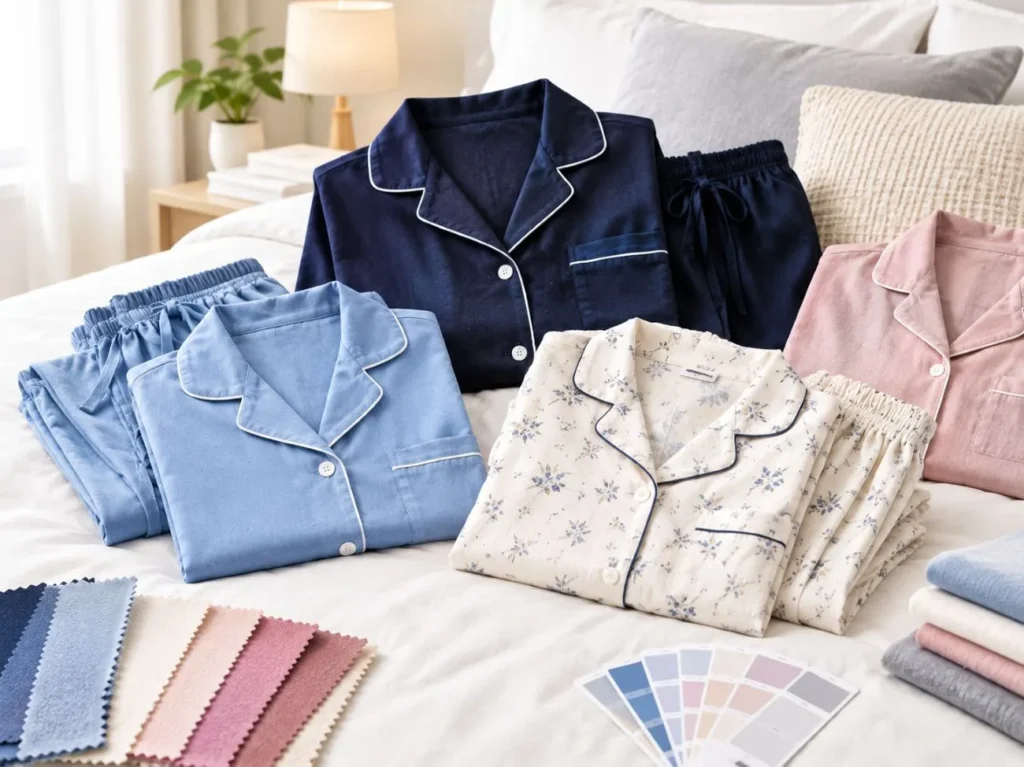
When sourcing custom pajamas for a clothing brand, you will often encounter two terms: manufacturer and supplier. Although these terms are sometimes used interchangeably, they do not always describe the same business model. A manufacturer produces garments, while a supplier is a broader term that may refer to a factory, trading company, sourcing company, or business that coordinates production through manufacturing partners.
Understanding the difference between a custom pajamas manufacturer vs supplier can help you make better sourcing decisions, evaluate quotations, plan customization, and manage production risks. However, the right partner is not determined by its title alone. What matters is its actual production capability, level of control, service scope, and ability to meet your requirements.
In this guide, we compare pajama manufacturers and suppliers across production, customization, minimum order quantity (MOQ), pricing, quality control, communication, and delivery. You will also learn how to evaluate potential partners before committing to samples or bulk production.
1. What Is a Custom Pajamas Manufacturer?
A custom pajamas manufacturer is a business that produces sleepwear according to a customer’s designs, specifications, or agreed product requirements. Depending on its capabilities, a manufacturer may manage some or many stages of production, including cutting, sewing, finishing, quality inspection, and packing.
For a custom pajama collection, the manufacturer’s role may begin before production. It may help source fabrics, develop patterns, adjust sizing, prepare samples, coordinate trims, and turn a product concept into a finished garment.
Typical services offered by a pajama manufacturer
- Product development: Reviewing design concepts, technical drawings, measurements, and construction requirements.
- Fabric sourcing: Helping identify materials suitable for the intended product, season, price point, and brand positioning.
- Pattern development and sampling: Developing garment patterns, producing samples, and implementing agreed revisions.
- Custom production: Manufacturing pajama tops, trousers, shorts, sets, and other sleepwear styles according to approved specifications.
- Branding and finishing: Coordinating labels, logos, trims, buttons, prints, embroidery, and packaging where supported.
- Quality control: Checking materials, measurements, construction, appearance, and other agreed quality requirements.
Not every manufacturer provides all these services directly. Some processes may be handled by approved external partners. Therefore, brands should confirm which activities the manufacturer performs in-house and which are outsourced.
If you are still evaluating production partners, read our guide on how to choose a custom pajamas manufacturer for your brand.
2. What Is a Pajama Supplier?
A pajama supplier is a broader category of business that provides pajamas or coordinates their production and delivery. A supplier may operate its own factory, purchase products from third-party manufacturers, manage a network of production partners, or specialize in sourcing and exporting apparel.
This means a pajama supplier is not necessarily a trading company, and a manufacturer can also operate as a supplier. The two roles can overlap depending on how the business is structured.
Common types of pajama suppliers
Manufacturing suppliers
These businesses produce pajamas themselves and sell directly to brands, retailers, wholesalers, or other B2B customers. They may provide OEM, ODM, or private label services depending on their capabilities.
Trading companies
Trading companies typically coordinate sourcing, quotations, orders, communication, and exports. They may work with one or more factories rather than manufacture every product themselves. Some offer valuable project management and access to a broader range of products, fabrics, or production partners.
Sourcing and procurement companies
These businesses help buyers identify factories, negotiate production arrangements, coordinate samples, or monitor orders. Their responsibilities may stop at sourcing or extend to project management and quality oversight, depending on the agreement.
Wholesale distributors
Wholesale distributors generally supply existing products, ready-made collections, or standardized styles. They may be suitable for buyers who prioritize availability and speed over extensive product development.
The important question is not simply whether a business calls itself a manufacturer or supplier. You need to understand what it actually does, which parties are responsible for each stage, and who is accountable if a problem occurs.
3. Custom Pajamas Manufacturer vs Supplier: Key Differences
The following table compares common characteristics of direct manufacturers and supplier businesses. Actual capabilities vary, so use this comparison as a starting point rather than an absolute rule.
| Evaluation factor | Custom pajamas manufacturer | Pajama supplier or sourcing company |
|---|---|---|
| Primary role | Produces garments and may support product development | Provides products or coordinates production and sourcing |
| Production control | May have direct control over specific factory processes | Depends on whether it owns production facilities or uses partner factories |
| Customization | Can support customization according to its technical capabilities | May offer customization through its own facility or manufacturing partners |
| Product development | May provide pattern development, sampling, and technical adjustments | May coordinate product development or focus on sourcing existing products |
| MOQ | Depends on production setup, materials, style, and order quantity | Depends on inventory availability, factory requirements, and sourcing arrangements |
| Pricing | Quotation may include manufacturing and agreed additional services | Quotation may include sourcing, coordination, or other service costs |
| Quality control | May conduct in-process and final inspections directly | May manage inspections through internal staff or third-party partners |
| Communication | May communicate directly with production and technical teams | May coordinate between the buyer, factory, and other service providers |
| Best fit | Brands requiring custom development and repeat production | Buyers seeking sourcing support, consolidated purchasing, or ready-made products |
Neither model is automatically better. A capable trading or sourcing company may provide effective coordination and reliable factory access. A manufacturer may offer direct production communication, but it still needs to demonstrate the quality, flexibility, and service level your project requires.
4. Which Option Offers Better Customization?
Customization is often a major reason brands look for a custom pajamas manufacturer. Instead of purchasing standard products, they want garments that reflect their own design, sizing, material preferences, branding, and packaging.
However, customization is not exclusive to manufacturers. A supplier can also manage a fully customized project if it has suitable production partners and a clear process for managing specifications and approvals.
Fabric and material selection
Custom pajama projects may require cotton, modal, bamboo-derived viscose, silk, satin, flannel, or other materials depending on the design and intended market.
Ask whether the partner can provide actual fabric options, explain the material specifications, arrange sample yardage, and confirm availability for the planned order quantity.
For more information about premium material choices, explore our custom modal pajamas sourcing guide.
Design and fit development
If you have a tech pack, design sketch, or reference garment, confirm whether the partner can interpret it accurately and develop samples according to your requirements.
Important details may include garment measurements, fit, seam construction, sleeves, collars, cuffs, pockets, buttons, piping, and finishing. Ask who is responsible for pattern revisions and how sample comments are documented.
Branding and private label options
Private label pajamas may require custom neck labels, care labels, size labels, hangtags, logos, printed designs, or branded packaging. Some projects also involve custom buttons, trims, and other product-specific details.
Confirm which options are available, whether they require separate minimum quantities, and whether the partner can coordinate all components within one production plan.
If you are building a branded sleepwear line, our private label pajamas manufacturer sourcing guide explains key considerations for product development and branding.
5. Manufacturer vs Supplier: MOQ and Pricing
MOQ and pricing are important when deciding how to source custom pajamas, particularly for startups and brands testing a new collection. However, neither manufacturers nor suppliers always offer lower prices or smaller minimum quantities. The result depends on the product, production arrangement, materials, and order requirements.
How MOQ is determined
For custom pajamas, the minimum order quantity may depend on:
- Whether the product uses existing fabric or requires custom fabric development.
- The number of styles and colors in the order.
- Fabric supplier minimums and dyeing or printing requirements.
- The complexity of garment construction and customization.
- Minimum quantities for labels, trims, buttons, and packaging.
- The production line setup and the supplier’s order policy.
A direct manufacturer may be able to explain production-related minimums in detail. A sourcing company may coordinate different suppliers and consolidate services. In either case, request a clear breakdown of MOQ by style, color, and any customized components.
How to compare quotations
Do not compare unit prices until you confirm that the quotations cover equivalent specifications. A lower price may reflect a different fabric composition, garment weight, construction method, packaging arrangement, or inspection scope.
Ask each candidate to clarify:
- Fabric composition, weight, and material source.
- Sampling fees and the number of included revisions.
- Production price and quantity assumptions.
- Custom labels, trims, printing, and packaging costs.
- Quality inspection arrangements.
- Shipping terms and any excluded charges.
Compare the complete cost and service package, not just the quoted garment price. Also clarify payment terms, quotation validity, and the circumstances under which additional costs may arise.
6. Quality Control: Who Is Responsible?
Quality control is one of the most important factors to verify when choosing a pajama manufacturing partner. The key distinction is not whether the company is called a manufacturer or a supplier, but how quality checks are planned, performed, recorded, and communicated.
For custom pajamas, quality checks may cover:
- Fabric composition, appearance, and consistency.
- Garment measurements and approved fit specifications.
- Stitching, seams, buttons, cuffs, and other construction details.
- Color matching and consistency between components.
- Logo placement, labels, and packaging.
- Applicable shrinkage, colorfastness, or other performance requirements.
Ask whether inspections take place during production, before packing, or at multiple stages. Find out who records the results and how nonconforming items are handled.
If a supplier works with third-party factories, ask how it monitors those factories and how inspection findings are reported to you. If you work directly with a manufacturer, confirm which checks it performs and whether additional testing or independent inspection is required for your project.
Before approving a bulk order, use our guide to evaluating a custom pajamas manufacturer before bulk production to structure your sample and production review.
7. Communication, Lead Time, and Order Management
Custom pajama production involves more than sewing garments. The process may include design review, fabric sourcing, sample development, revisions, material purchasing, production, inspection, packing, and shipping.
Multiple parties can be involved whether you work with a manufacturer or a sourcing supplier. What matters is that every stage has a clear owner and a realistic timeline.
Before placing an order, confirm:
- Project contact: Who manages questions, approvals, and production updates?
- Sample timeline: How long will fabric sourcing, sampling, and revisions take?
- Bulk schedule: When does production begin, and what conditions must be met first?
- Approval process: Who signs off on samples, fabrics, artwork, and packaging?
- Quality reporting: When will inspections take place, and how are issues communicated?
- Shipping responsibility: Who arranges packing, export documentation, and transportation?
A well-managed supplier relationship should make responsibilities transparent rather than requiring you to guess which party controls each step.
8. When Should You Choose a Custom Pajamas Manufacturer?
Working directly with a manufacturer may be suitable when your brand needs close coordination between product development and production.
Consider this model when:
- You have your own pajama designs or detailed specifications.
- You need custom patterns, fit development, or repeated sample revisions.
- You want to control fabric, colors, construction, and finishing details.
- You need to understand how your order moves through production.
- You expect repeat orders and want to maintain consistent product specifications.
- You need a partner that can support an evolving product range.
Before making a decision, verify the manufacturer’s actual factory arrangements and capabilities. A company that produces some items in-house and outsources others may still be suitable, provided the responsibilities and controls are clear.
For a practical sourcing process, see our article on how to find a reliable pajamas manufacturer in China.
9. When Is a Pajama Supplier the Better Choice?
A supplier or sourcing company may be more suitable when it offers services that match your purchasing needs. For example, some buyers prioritize ready-made stock, access to multiple factories, consolidated procurement, or assistance coordinating several types of products.
Consider a supplier when:
- You want to purchase existing pajama styles rather than develop a completely new design.
- You need help sourcing different products or materials from multiple production partners.
- You want one contact to coordinate several factories or product categories.
- The supplier has established production partners and a transparent quality management process.
- Its service fees, responsibilities, and delivery arrangements are clearly explained.
For customized products, make sure the supplier can still manage your specifications, sample approval, quality requirements, and production changes. A sourcing intermediary can add value, but unclear responsibility between the supplier and factory may create delays or communication problems.
10. Questions to Ask Before Choosing a Partner
Use the following questions to identify the business model and assess whether the company can support your pajama project.
- Do you manufacture pajamas in your own facility? Ask which processes are performed in-house and which are subcontracted.
- What is your role in the production process? Clarify whether the company manufactures, sources, exports, or coordinates production through partner factories.
- What custom pajama styles can you produce or source? Request examples relevant to your product category.
- Can you develop samples from my tech pack or reference garment? Confirm the sampling method, fees, and revision process.
- What fabrics and customization options are available? Ask about material specifications, colors, labels, trims, and packaging.
- How is MOQ calculated? Confirm the minimums for each style, color, fabric, and customized component.
- How do you control product quality? Ask for details about inspection stages and handling of defects.
- What is included in the quotation? Clarify sampling, production, branding, packaging, inspection, and shipping costs.
- Who is responsible for production delays or quality issues? Ensure responsibilities and corrective procedures are agreed upon in writing.
- Can you support repeat orders? Discuss how approved samples, specifications, materials, and quality standards will be maintained.
11. Supplier Evaluation Checklist
Before committing to a bulk order, compare each candidate against the same criteria. This reduces the risk of choosing a partner based solely on a low price or a persuasive sales presentation.
| Evaluation area | What to verify |
|---|---|
| Business model | Factory, manufacturer-supplier, trading company, or sourcing agent |
| Production capability | Relevant pajama styles, processes, capacity, and subcontracting arrangements |
| Product development | Technical review, pattern development, samples, and revisions |
| Materials | Fabric composition, weight, sourcing, color, and availability |
| Customization | Branding, trims, labels, prints, and packaging options |
| MOQ and price | Minimums by style and color, cost breakdown, and quotation scope |
| Quality control | Inspection procedures, reporting, and responsibility for corrective action |
| Timeline | Sample development, production, inspection, and shipping schedule |
| Communication | Clear ownership of approvals, updates, changes, and problem resolution |
| Long-term support | Ability to manage repeat orders and additional styles as the brand grows |
Whenever possible, request a physical sample, verify the business and production arrangements, and document the agreed specifications before placing a bulk order.
12. Work with Beyson Apparel for Custom Pajama Manufacturing
Beyson Apparel supports B2B customers developing custom pajamas and sleepwear collections. Depending on project requirements, services can include fabric sourcing, product customization, sampling, OEM/ODM production, quality inspection, packaging, and export coordination.
For brands seeking a custom production partner, the important first step is to define the intended product clearly. Share your pajama style, fabric preferences, size range, colors, branding details, estimated order quantity, and target schedule so your requirements can be evaluated more effectively.
Explore our custom pajamas and sleepwear manufacturing services to learn more about developing products for your brand.
If you are starting a new sleepwear business, our guide on how to start a private label pajama brand can also help you organize product development, sourcing, and launch planning.
Planning a custom pajama collection? Contact our team to discuss your fabric, design, MOQ, branding, and production requirements.
Email: sales@beysonapparel.com
Frequently Asked Questions
What is the difference between a pajama manufacturer and a supplier?
A manufacturer produces garments, while a supplier is a broader term that may refer to a manufacturer, trading company, sourcing company, or distributor. A supplier may also manufacture products directly. Always verify the actual business model and production responsibilities.
Is it cheaper to buy pajamas directly from a manufacturer?
Not necessarily. Direct sourcing may reduce some intermediary costs, but the final price depends on materials, order quantity, customization, factory efficiency, service scope, and other charges. Compare complete quotations using the same specifications.
Can a pajama supplier provide private label services?
Yes. A supplier can coordinate private label production through its own factory or manufacturing partners. Confirm that it can manage your required labels, logos, packaging, sample approvals, and quality standards.
Should startups work directly with a pajama manufacturer?
Direct manufacturing can be suitable when a startup needs custom product development and clear communication with production teams. A sourcing company may also be useful when it provides appropriate development support, suitable factory access, and transparent project management. Choose based on your needs rather than the business title alone.
How can I verify whether a pajama supplier is a real manufacturer?
Ask for the production facility’s location, details of manufacturing processes, relevant product examples, and an explanation of which stages are completed in-house or outsourced. Where appropriate, arrange a factory audit or independent verification and confirm that the proposed production arrangements match your order.
What should I prepare before requesting a custom pajama quotation?
Prepare the pajama style, fabric composition, garment measurements, size range, color references, branding and packaging requirements, estimated order quantity, and target delivery schedule. Reference images or a tech pack can help reduce misunderstandings.
* This article was written by the manufacturing team of Beyson Apparel. We are a clothing ODM/OEM factory with 15+ years of experience, covering products such as Underwear, T-shirt, Polo Shirts, Hoodies, Pajamas, Shorts and more. Direct inquiry, reply within 12 hours *