
 Call us now:

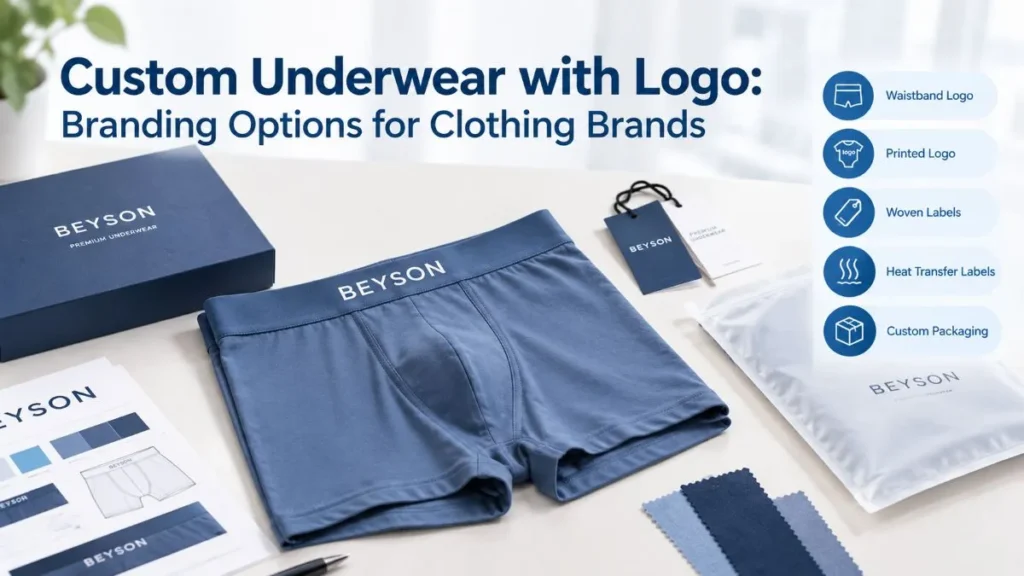
Custom underwear with logo is an effective way for clothing brands to turn a basic garment into a recognizable branded product. From waistband logos and printed graphics to woven labels, heat transfer branding, and custom packaging, brands can customize multiple elements of an underwear collection.
However, choosing the right branding method involves more than simply placing a logo on the garment. The fabric, garment construction, logo position, printing method, label type, order quantity, and target market can all affect the final product.
This guide explains the main custom underwear branding options available to clothing brands and what to consider before starting OEM or private label underwear production.
Why Choose Custom Underwear with a Logo?
Underwear is a highly personal and frequently used product, which makes branding an important part of product development. A well-designed logo can help customers recognize your brand and create consistency across your apparel collection.
For clothing brands, custom logo underwear can also work as part of a broader product range rather than as a standalone item. The same brand identity can be applied across underwear, T-shirts, pajamas, activewear, and other apparel categories.
When developing a branded underwear collection, the logo should work together with the fabric, colors, waistband, labels, packaging, and overall garment design.
If you are still selecting a production partner, our guide on how to choose a custom underwear manufacturer explains the main factors brands should evaluate before starting production.
1. Custom Waistband Logo
The waistband is one of the most visible branding areas on underwear, especially for boxer briefs, briefs, and other men’s underwear styles. A custom waistband can display a brand name, logo, pattern, or combination of text and graphics.
There are two common approaches: jacquard woven waistbands and printed elastic waistbands.
Jacquard Waistband
A jacquard waistband incorporates the logo directly into the elastic structure by weaving colored yarns into the waistband. This creates a textured and integrated appearance.
Jacquard branding is commonly considered when a brand wants a more substantial waistband appearance and long-term visual durability.
Printed Waistband
Printed elastic waistbands apply the logo or artwork to the surface of the waistband. This approach can provide greater flexibility for detailed graphics, multiple colors, or smaller production runs.
The right option depends on the logo design, desired appearance, production quantity, budget, and product positioning.
For a more detailed comparison, see our guide: Jacquard vs. Printed Elastic Waistband: Which is Right for Your Custom Underwear Line?
2. Printed Logo on the Underwear
Logo printing can be used on different parts of an underwear garment depending on the design and fabric. Brands may use printed logos for front panels, side panels, inner waist areas, or other suitable locations.
Printing can be useful when the artwork contains detailed graphics, multiple colors, or visual elements that are difficult to reproduce through woven construction.
When selecting a printing method, brands should consider:
- Fabric composition
- Fabric stretch and recovery
- GSM and surface texture
- Logo size and placement
- Number of colors
- Wash durability
- Hand feel and skin comfort
A logo that looks good on a flat artwork file may perform differently once applied to a stretchy underwear fabric. Sampling is therefore important before bulk production.
3. Woven Labels for Custom Underwear
Woven labels provide another way to add brand identification to underwear. They can include a brand name, logo, size information, or other product details.
Woven labels are particularly useful for brands that want a visible textile branding element rather than printing directly onto the garment.
However, underwear comes into direct contact with the skin, so label construction and placement need to be considered carefully. A label that is too thick, stiff, or poorly positioned may affect wearing comfort.
Our detailed guide Custom Underwear Labels: Woven, Printed, and Heat Transfer Options compares the main labeling methods and explains how brands can select the right option.
4. Printed and Heat Transfer Labels
Printed and heat transfer labels are often considered when brands want a low-profile branding solution inside the garment.
Compared with traditional sewn labels, these methods can reduce bulk and create a cleaner inner surface. They may be suitable for minimalist underwear collections, sports underwear, and products where next-to-skin comfort is a priority.
Depending on the product requirements, a label can include:
- Brand name or logo
- Size
- Fiber composition
- Care instructions
- Country-of-origin information
- Product identification information
The final label specification should be confirmed according to the target market and applicable labeling requirements.
5. Logo Placement Matters
A custom logo can be technically well produced but still look unbalanced if it is placed incorrectly. Logo placement should be considered during the product development stage rather than after the garment has already been designed.
Common branding locations include:
- Front waistband
- Back waistband
- Center front panel
- Side panel
- Inner waistband
- Back or side label position
For men’s boxer briefs, the waistband is often a major branding area because it remains visible when the garment is worn with low-rise trousers or as part of product photography.
For women’s underwear, the preferred position may depend more heavily on the garment silhouette, construction, lace or elastic components, and comfort requirements.
6. Match the Branding Method to the Fabric
The same logo application method may not perform equally well on every underwear fabric. Cotton, modal, bamboo-based fabrics, polyester blends, nylon, and elastane-containing fabrics can have different surface characteristics and stretch behavior.
For example, a highly elastic fabric may require a branding solution that can accommodate repeated stretching without creating excessive stiffness or distortion.
Fabric selection should therefore be considered together with branding during product development.
If you are still comparing materials, read: How to Choose the Best Fabric for Custom Underwear.
For men’s boxer briefs, you can also review: How to Choose Fabric for Custom Boxer Briefs: A B2B Sourcing Guide.
7. Custom Packaging Extends Your Brand Identity
Branding does not have to stop at the garment itself. Custom packaging can help create a consistent presentation from the first interaction with the customer through the actual product experience.
Common packaging options include:
- Custom paper boxes
- Printed folding boxes
- Custom polybags
- Paper sleeves
- Hang tags
- Barcode labels
- Custom stickers
Packaging should match the positioning of the underwear collection. A premium underwear brand may require a more refined packaging system, while a basic or sustainable collection may prioritize simple and efficient packaging.
It is also important to consider packaging requirements during the quotation stage because packaging materials, printing, assembly, and packing methods can affect the overall manufacturing cost.
8. Prepare Your Logo Artwork Before Sampling
Providing clean artwork can make the development process more efficient. Before requesting a custom underwear sample, brands should prepare the logo and branding specifications as clearly as possible.
Useful information includes:
- Logo artwork or vector file
- Brand colors or Pantone references
- Logo dimensions
- Preferred logo position
- Waistband specifications
- Label dimensions
- Packaging requirements
- Estimated order quantity
If you are preparing your first underwear sample, see our B2B guide to requesting an underwear manufacturing sample for the information that should be included in a sample request.
9. Consider MOQ and Branding Costs
Custom branding can affect the manufacturing cost and minimum order quantity of an underwear project. Different components may have different setup requirements and production quantities.
For example, a custom jacquard waistband may require a specific production setup, while a printed logo may offer a different level of flexibility. Custom labels and packaging can also have their own minimum quantities.
Therefore, brands should not evaluate the underwear unit price separately from the branding requirements.
When requesting a quotation, provide the manufacturer with your complete requirements so the supplier can calculate the project more accurately.
10. Custom Underwear Branding Options at a Glance
| Branding Method | Best For | Main Consideration |
|---|---|---|
| Jacquard Waistband | Premium branded underwear | Logo is integrated into the waistband structure |
| Printed Waistband | Flexible branding and detailed graphics | Print performance depends on application and material |
| Printed Logo | Graphic branding and artwork | Fabric stretch and wash durability |
| Woven Label | Traditional textile branding | Thickness, placement, and skin comfort |
| Heat Transfer Label | Low-profile or tagless-style branding | Adhesion and wash performance |
| Custom Packaging | Retail presentation and brand experience | Packaging design, MOQ, and assembly |
How to Choose the Right Custom Underwear Branding Option
There is no single branding method that works for every clothing brand. The right combination depends on your product positioning, target customer, garment fabric, order quantity, design complexity, and budget.
Before finalizing the branding specification, consider these questions:
- Where should the logo be visible?
- Does the logo need to withstand repeated stretching and washing?
- Is next-to-skin comfort a major priority?
- Does the artwork require multiple colors or fine details?
- What is the expected order quantity?
- Do the waistband and label need to match the brand identity?
- Does the packaging need to be customized?
- Should the branding remain consistent across future product collections?
A good manufacturer should be able to discuss these requirements with you before sampling rather than simply applying the logo after the product design has been finalized.
Custom Underwear with Logo: What to Send to Your Manufacturer
To receive an accurate quotation and reduce sampling revisions, prepare a clear product brief before contacting a manufacturer.
- Underwear style and product category
- Fabric composition and preferred GSM
- Size range
- Garment colors
- Logo artwork
- Logo placement
- Waistband design
- Label requirements
- Packaging requirements
- Target order quantity
- Target market
- Expected delivery timeline
The more complete the specification, the easier it is for a manufacturer to evaluate the project and provide a useful quotation.
Why Work With a Custom Underwear Manufacturer?
Custom underwear production involves multiple components that need to work together. Fabric, fit, waistband construction, logo application, labels, packaging, and quality control should be coordinated throughout product development.
Beyson Apparel provides OEM and ODM underwear manufacturing services for clothing brands, retailers, wholesalers, and private label businesses. Its customization capabilities include fabric selection, colors, sizes, waistbands, logos, labels, packaging, sampling, and bulk production.
You can learn more about the complete custom underwear manufacturing service and available product development options.
Final Thoughts
Custom underwear with logo can be developed in many different ways. A brand may choose a jacquard waistband for a strong visual identity, printed branding for detailed artwork, woven labels for textile branding, or heat transfer labels for a low-profile solution.
Custom packaging can then extend the same identity beyond the garment itself.
The most important point is to evaluate branding as part of the complete underwear product rather than treating the logo as an isolated detail. Fabric, garment construction, logo placement, label comfort, washing performance, MOQ, and packaging should all be considered before bulk production.
For clothing brands developing a new underwear collection, working with an experienced OEM/ODM manufacturer can help coordinate these elements from sampling through bulk production.
Ready to Develop Custom Underwear with Your Logo?
Share your logo, product requirements, fabric preferences, or packaging ideas with Beyson Apparel to discuss your custom underwear project.
Email: sales@beysonapparel.com
* This article was written by the manufacturing team of Beyson Apparel. We are a clothing ODM/OEM factory with 15+ years of experience, covering products such as Underwear, T-shirt, Polo Shirts, Hoodies, Pajamas, Shorts and more. Direct inquiry, reply within 12 hours *