
 Call us now:

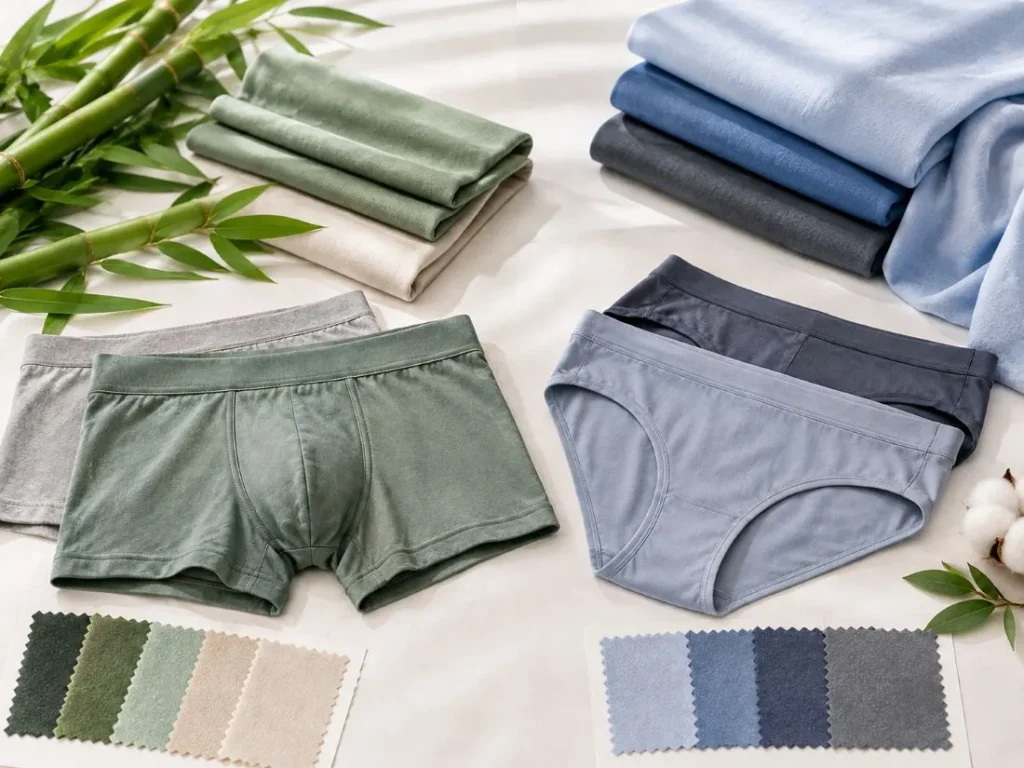
Choosing the right fabric is one of the most important decisions when developing a custom underwear collection. The material affects softness, drape, moisture management, stretch, durability, production cost, and the overall experience your customers associate with your brand.
Two materials frequently considered for premium underwear are bamboo-based viscose and modal. Both can be used to create soft, comfortable underwear, but they are not identical. Their performance depends on the fiber specification, fabric construction, blend ratio, weight, finishing, and manufacturing quality.
For clothing brands, retailers, and private label buyers, the question is not simply whether bamboo or modal is better. It is which material is more suitable for your product concept, target customer, price point, and production requirements.
This guide compares bamboo vs modal underwear from a custom manufacturing perspective, helping you evaluate the differences before selecting a fabric for sampling and bulk production.
1. What Is Bamboo Underwear Fabric?
In the apparel market, bamboo underwear commonly refers to fabric made from regenerated cellulose using bamboo as the raw material. Bamboo-derived viscose, also known as bamboo rayon, is widely used in soft underwear and other next-to-skin garments.
The bamboo plant is processed to obtain cellulose, which is then converted into textile fiber. The properties of the finished fabric depend on the manufacturing process, yarn, knitting construction, fabric weight, and any added fibers.
Bamboo-derived viscose is often selected for underwear collections that emphasize a smooth hand feel, fluid drape, and everyday comfort. It may be blended with elastane to improve stretch and recovery, depending on the intended garment design.
Potential advantages for custom underwear
- Smooth hand feel: Suitable for underwear designed to feel soft against the skin.
- Fluid drape: Can support a lightweight, close-to-body silhouette.
- Comfort-focused positioning: A possible option for premium everyday underwear and lounge-oriented collections.
- Blend flexibility: Can be developed with elastane or other fibers to achieve the desired fabric performance.
- Versatile styling: Can be used for different underwear styles, depending on fabric weight and construction.
These are potential characteristics, not guaranteed results for every bamboo-based fabric. Always evaluate the actual fabric specification and sample before making product claims.
For sourcing details, read our custom bamboo underwear fabric sourcing guide.
2. What Is Modal Underwear Fabric?
Modal is a type of regenerated cellulose fiber. It is commonly made from wood-based cellulose and is frequently used in apparel where a smooth surface, softness, drape, and comfortable wearing experience are priorities.
For underwear brands, modal can be an attractive option for premium everyday products, including boxer briefs, trunks, briefs, and other styles that benefit from a soft, flexible fabric.
Potential advantages for custom underwear
- Soft, smooth feel: Commonly selected for premium next-to-skin garments.
- Comfortable drape: Can create a smooth appearance in close-fitting underwear.
- Moisture management: Cellulose-based fibers can absorb moisture, although finished-fabric performance varies by construction and blend.
- Design versatility: Can be developed for different underwear silhouettes and product positions.
- Blend options: Modal-elastane fabrics are available for products requiring additional stretch and recovery.
Modal may be suitable for brands aiming to position their underwear as soft and premium. However, the fabric name alone does not guarantee superior durability, moisture management, or comfort. These properties should be assessed against the actual product requirements.
Learn more in our guide to working with a modal underwear OEM manufacturer.
3. Bamboo vs Modal Underwear: Key Differences
Bamboo-derived viscose and modal share some characteristics because both belong to the broader category of regenerated cellulose fibers. However, they are distinct fiber types, and the comparison should be based on the actual fabric rather than general marketing descriptions.
| Comparison factor | Bamboo-derived viscose | Modal |
|---|---|---|
| Fiber category | Usually regenerated cellulose made from bamboo pulp | Regenerated cellulose fiber commonly made from wood-based cellulose |
| Hand feel | Can offer a smooth, soft feel | Often selected for softness and a smooth surface |
| Drape | Often fluid, depending on yarn and construction | Often fluid, depending on yarn and construction |
| Moisture management | Depends on fiber quality, knit structure, blend, and finishing | Depends on fiber quality, knit structure, blend, and finishing |
| Stretch and recovery | Depends largely on fabric construction and any elastane content | Depends largely on fabric construction and any elastane content |
| Durability | Must be evaluated through fabric and garment testing | Must be evaluated through fabric and garment testing |
| Environmental assessment | Depends on the actual fiber process, chemical management, energy, water, and supply chain | Depends on the fiber producer, raw material sourcing, process, and verified product-specific data |
| Common product direction | Comfort-focused everyday underwear | Premium everyday underwear and soft-feel collections |
| Key sourcing priority | Verify the precise fiber designation and production process | Confirm the modal specification, supplier, and any branded-fiber claims |
Neither material is automatically better in every category. A well-engineered bamboo-viscose blend may outperform a poorly constructed modal fabric in certain tests, while a high-quality modal fabric may better satisfy the hand feel or durability requirements of another product.
To compare additional material options, see our overview of the best fabrics for underwear: cotton vs modal vs bamboo.
4. Which Fabric Feels Softer and More Comfortable?
Softness is often a key selling point for both bamboo-derived viscose and modal underwear. However, it is difficult to declare one universally softer because hand feel depends on the fiber specification, yarn fineness, knitting structure, finishing, and fabric weight.
When developing a custom underwear collection, assess comfort through physical samples rather than relying on the fiber name alone.
What to evaluate during sampling
- Surface smoothness: Check whether the fabric feels comfortable against the skin.
- Weight and drape: Determine whether the fabric is too heavy, too light, or suitable for the intended silhouette.
- Stretch: Confirm that the fabric accommodates movement without excessive restriction.
- Recovery: Check whether the material returns toward its original shape after stretching.
- Seam comfort: Evaluate whether seams, gussets, and other construction details create unwanted pressure or irritation.
- After-wash feel: Assess whether softness, shape, and surface appearance remain acceptable after laundering.
For a premium product, the complete garment experience matters more than the fiber name. Pattern engineering, waistband tension, seam placement, and fit all contribute to perceived comfort.
5. Breathability and Moisture Management
Both bamboo-derived viscose and modal can be used in underwear intended for everyday comfort. Their moisture-related performance, however, should not be assumed to be identical or superior simply because of the fiber category.
Moisture absorption, moisture movement, and drying speed are different properties. A fabric may absorb moisture but not move or release it as quickly as another construction. Fabric thickness, yarn structure, knit density, elastane content, and finishing can affect the result.
How to evaluate moisture performance
For brands developing underwear for warm climates or customers who prioritize all-day comfort, ask the fabric supplier about relevant performance data. Where moisture management is an important product requirement, consider testing the actual fabric for absorbency, drying behavior, and moisture transfer using appropriate methods.
Also consider the complete product design. A thicker fabric, tight fit, or highly compressive construction may feel different from a lightweight, relaxed garment made from a similar fiber.
Avoid making claims such as “naturally antibacterial” or “odor-proof” for bamboo-derived viscose unless reliable evidence supports the claim for the finished textile. Processing bamboo into viscose does not automatically preserve the plant’s original biological properties.
6. Which Fabric Is More Durable?
Durability should be assessed at the fabric and garment levels. Fiber type is only one factor; yarn quality, fabric construction, elastane content, dyeing, finishing, sewing, and care conditions also influence the service life of underwear.
For custom underwear projects, useful evaluation areas include:
- Stretch recovery: Check whether the fabric maintains the intended fit after repeated stretching.
- Dimensional stability: Measure shrinkage and changes in garment dimensions after washing.
- Pilling resistance: Assess surface changes under conditions relevant to expected use.
- Colorfastness: Check color retention during washing and other relevant exposure.
- Seam and garment integrity: Inspect areas subject to repeated movement, friction, and tension.
- Waistband performance: Evaluate whether the elastic remains comfortable and functional after repeated wear and washing.
Use the same testing conditions when comparing bamboo-derived viscose and modal samples. This makes the results more useful than comparing supplier descriptions or unrelated test reports.
For help specifying fabric performance and technical details, read our custom underwear fabric and tech pack guide.
7. Bamboo vs Modal: Which Is Better for Different Underwear Styles?
The ideal material depends on the product’s intended positioning and technical requirements. The following suggestions can help brands shortlist fabrics for sampling.
Premium Men's Boxer Briefs
Both bamboo-derived viscose and modal can be considered for premium boxer briefs. Brands should focus on the combination of softness, fabric weight, stretch recovery, supportive fit, and waistband comfort.
A fabric with insufficient recovery may not maintain the intended silhouette, regardless of how soft it feels. Evaluate the fabric together with the pattern, pouch construction, inseam, and waistband specification.
For additional fabric-selection guidance, read how to choose fabric for custom boxer briefs.
Everyday Women's Underwear
For everyday women’s underwear, prioritize a comfortable hand feel, suitable stretch, smooth seams, and a fit that works for the intended design. Both materials may be suitable, depending on the fabric construction and garment requirements.
For styles with close-fitting edges or more demanding construction, review how the fabric behaves around leg openings, waistbands, and gussets.
Lightweight and Comfort-Focused Collections
For lightweight underwear, compare fabric weight, drape, opacity, drying behavior, and dimensional stability. A fabric that feels excellent as a swatch may behave differently when constructed into a complete garment.
Request samples in the intended composition and weight rather than approving a material based on a general fiber description.
Performance-Oriented Underwear
If the collection is designed for sports or higher-activity use, evaluate moisture management, stretch recovery, abrasion resistance, and drying behavior more closely. Do not assume bamboo-derived viscose or modal is automatically the best performance choice; other fiber blends may be worth testing against the same requirements.
8. Cost, MOQ, and Custom Manufacturing Considerations
The cost of bamboo-derived viscose underwear versus modal underwear depends on the complete fabric specification and production arrangement. Fiber type alone is not enough to determine which option will be cheaper.
Important cost factors include:
- Fabric specification: Fiber quality, GSM, knitting construction, blend ratio, and finishing.
- Material availability: Whether the required fabric is readily available or needs special development.
- Order quantity: Total units, number of styles, and quantity per color.
- Color customization: Special dyeing, color matching, and additional laboratory samples where applicable.
- Garment construction: Pattern complexity, seams, gussets, waistband construction, and other details.
- Branding and packaging: Custom labels, logos, hangtags, and retail packaging.
- Testing and inspection: Any required fabric tests, garment tests, or additional quality checks.
MOQ may be influenced by fabric supplier requirements, dyeing arrangements, production setup, and the manufacturer’s order policy. Ask whether minimum quantities apply per style, color, or fabric rather than assuming that one MOQ covers the entire order.
For a more detailed budget breakdown, see our guide to the factors affecting custom underwear manufacturing cost.
9. Sustainability and Fiber Claims: What Brands Should Know
Sustainability can influence material selection, but brands should avoid assuming that bamboo-derived viscose is automatically more sustainable than modal, or that all modal fabrics have the same environmental profile.
Environmental performance depends on factors such as the raw material source, chemical processing, energy and water use, wastewater treatment, fiber production, textile finishing, and the broader product life cycle. Claims should be supported by evidence relevant to the actual fiber or fabric being purchased.
Brands selling into the United States should also check applicable fiber-labeling rules. The U.S. Federal Trade Commission’s guidance on bamboo textiles explains that rayon or viscose made from bamboo should generally be identified using the appropriate fiber name rather than implying the finished product consists of natural bamboo fiber.
For private label products, confirm that fiber descriptions, country-of-origin information, certifications, and sustainability claims are accurate and supported by the relevant supplier documentation.
10. How to Choose Between Bamboo and Modal for Custom Underwear
Before selecting a fabric, define the performance and commercial goals of your collection. A practical comparison process should include the following steps.
- Define your target customer. Decide whether softness, lightweight comfort, fit retention, durability, price, or another attribute is the primary priority.
- Confirm the actual fiber composition. Request the precise fiber designation, blend percentages, GSM, and fabric construction.
- Review physical fabric swatches. Compare hand feel, surface appearance, drape, and weight under the same conditions.
- Evaluate the intended garment. Develop the fabric into the target underwear style instead of judging it only as a flat swatch.
- Test relevant performance. Review stretch recovery, shrinkage, colorfastness, pilling, and other requirements based on the product brief.
- Compare complete quotations. Include development, fabric, customization, testing, packaging, and production costs.
- Confirm production readiness. Approve the sample and written specifications before moving into bulk manufacturing.
If you are selecting a production partner as well as a fabric, use our custom underwear manufacturer selection guide to evaluate the manufacturer’s product development and sourcing capabilities.
For help planning your sampling process, see how to request an underwear manufacturing sample.
Conclusion: Bamboo or Modal for Your Custom Underwear Line?
Bamboo-derived viscose and modal can both be suitable for soft, comfortable custom underwear. The better option depends on your brand’s target market, desired hand feel, fabric construction, performance requirements, sustainability criteria, and target cost.
Bamboo-derived viscose may suit brands exploring a bamboo-based material story and a smooth, fluid fabric. Modal may be attractive for collections emphasizing softness and a premium hand feel. Neither option is automatically superior in durability, moisture management, environmental performance, or cost.
The most reliable approach is to compare actual fabric specifications, review samples, test the finished garment, and document the approved requirements before bulk production.
Developing a custom underwear collection? Beyson Apparel supports B2B underwear development and manufacturing. Share your preferred material, product style, size range, branding requirements, and estimated order quantity with our team.
Explore our custom underwear manufacturing services to learn more about OEM and private label production options.
Email: sales@beysonapparel.com
Frequently Asked Questions
Is bamboo or modal better for underwear?
Neither is universally better. Both can provide a soft hand feel, but the final result depends on fiber quality, fabric construction, blend ratio, weight, and finishing. Compare actual samples against your product requirements before choosing.
Is bamboo underwear the same as modal underwear?
No. Bamboo-derived viscose is usually made from bamboo pulp through a regenerated-cellulose process. Modal is another type of regenerated cellulose fiber, commonly made from wood-based cellulose. The exact fiber designation should be confirmed with the fabric supplier.
Does bamboo underwear have natural antibacterial properties?
Do not assume that bamboo-derived viscose retains the bamboo plant’s natural biological properties. Claims about antibacterial or odor-control performance should be supported by reliable evidence for the finished textile.
Is modal underwear more durable than bamboo underwear?
Not in every case. Durability depends on fiber quality, yarn, fabric construction, elastane content, finishing, garment design, and care. Compare samples through relevant tests such as shrinkage, pilling, colorfastness, and stretch recovery.
Which fabric is more sustainable?
There is no universal answer based only on the fiber name. Environmental impact depends on raw material sourcing, processing methods, chemical management, energy and water use, finishing, and other life-cycle factors. Request relevant documentation from the fiber or fabric supplier.
Can bamboo-derived viscose and modal be blended with elastane?
Yes, blends with elastane are used in underwear fabrics when stretch and recovery are required. The suitable blend ratio depends on the intended fit, fabric construction, comfort goals, and production specifications.
What should I request from a custom underwear manufacturer?
Ask for the exact fiber composition, fabric weight, construction, sample availability, performance data where relevant, MOQ, pricing, and customization options. Approve a physical sample and record the agreed specifications before bulk production.