
 Call us now:

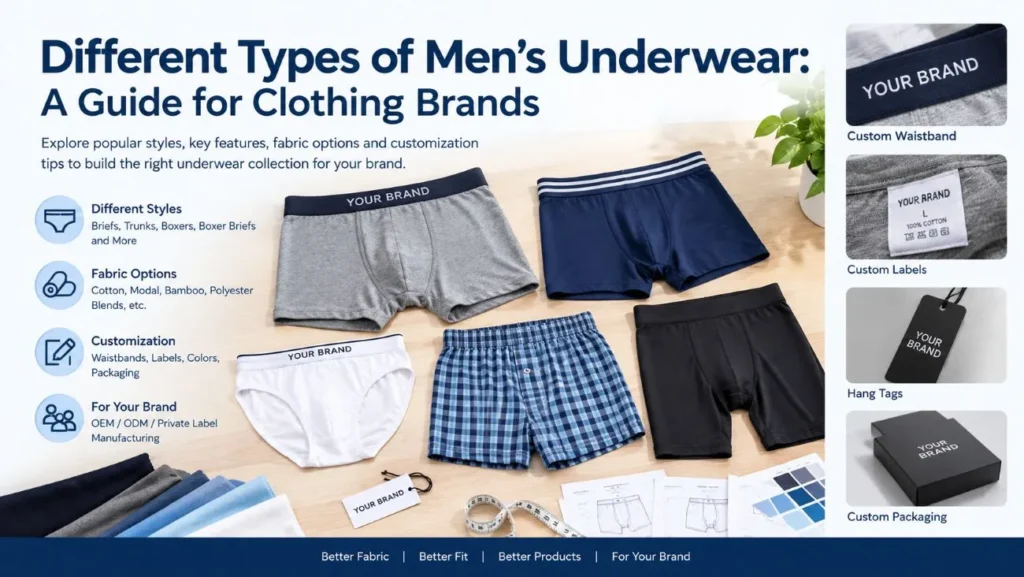
Men’s underwear is more than a basic clothing essential. For clothing brands, it is an opportunity to build a product line around comfort, fit, fabric performance, and distinctive branding. However, with so many styles available, choosing the right products can be challenging, especially for brands developing a new private label underwear collection.
Understanding the different types of men’s underwear helps brands identify suitable products for their target customers, price points, and sales channels. From supportive boxer briefs and minimalist briefs to relaxed boxers and modern trunks, each style offers different advantages in coverage, silhouette, and functionality.
In this guide, we explain the main men’s underwear styles, compare their features, and discuss what clothing brands should consider when developing a custom underwear collection.
Why Should Clothing Brands Understand Different Men's Underwear Styles?
Before selecting products for a new collection, brands should understand how each underwear style meets different customer needs. A product designed for everyday comfort may require different specifications from performance underwear or premium fashion underwear.
Understanding the differences helps brands:
- Build a balanced product range: Offer different fits and coverage levels to appeal to a broader customer base.
- Select suitable fabrics: Match fabric stretch, softness, breathability, and recovery to each design.
- Differentiate the brand: Use silhouette, waistband design, colors, and branding to create a recognizable identity.
- Manage product costs: Choose appropriate construction details, materials, and packaging for the target price point.
- Reduce development risks: Confirm fit, sizing, and construction before moving into bulk production.
1. Boxer Briefs
Boxer briefs combine the close fit of briefs with the longer leg coverage of traditional boxers. They typically extend down the upper thigh and provide support while helping reduce direct skin-to-skin friction between the thighs.
Boxer briefs are a versatile option for everyday underwear, active lifestyles, and premium men’s basics. They are also a popular starting point for brands developing private label men’s underwear because the style offers multiple opportunities for differentiation.
Key Features
- Close-fitting silhouette with extended leg coverage.
- Supportive front pouch, depending on the pattern and construction.
- Suitable for a range of fabric weights and stretch levels.
- Can be developed with different leg lengths, rises, waistbands, and pouch constructions.
Best Fabric Options
Cotton-elastane blends are widely used for everyday boxer briefs. Modal blends can provide a smooth, soft hand feel, while bamboo-derived viscose blends may appeal to brands emphasizing softness and drape. Polyester-elastane blends can be considered for selected performance applications.
Fabric selection should account for stretch recovery, moisture management, opacity, durability, and the intended fit. For more detail, see our guide on how to choose fabric for custom boxer briefs.
Customization Opportunities
- Short, regular, or extended leg lengths.
- Custom pouch shapes and construction details.
- Jacquard or printed elastic waistbands.
- Custom colors, prints, labels, and retail packaging.
For brands: Boxer briefs are a practical core product for building a collection that balances coverage, support, and customization.
2. Boxer Shorts
Traditional boxer shorts feature a loose fit, a relaxed leg opening, and greater airflow than close-fitting underwear styles. They are commonly designed with a woven or lightweight knitted fabric and may include a front fly, an elastic waistband, or a button closure.
Boxer shorts are often associated with relaxed everyday wear and sleepwear. Depending on the fabric, construction, and design, they can also serve as a casual lounge product.
Key Features
- Loose silhouette with generous leg room.
- Less body compression than close-fitting styles.
- Suitable for lightweight woven cotton and selected soft knitted fabrics.
- Can feature checks, stripes, seasonal prints, or solid colors.
What Brands Should Consider
Fit is particularly important because excessive fabric can bunch under slim trousers, while an overly narrow pattern can compromise the intended relaxed feel. Brands should also consider fabric drape, waistband comfort, fly construction, and shrinkage after washing.
For premium collections, fabric quality and finishing can make a meaningful difference to the perceived value of a relatively simple garment.
3. Briefs
Men’s briefs are a classic underwear style featuring a supportive front and a high-cut leg opening. Unlike boxer briefs and trunks, briefs have no extended leg panels, making them suitable for customers who prefer minimal leg coverage and a compact fit.
Key Features
- High-cut leg openings.
- Supportive construction with minimal leg coverage.
- Compact silhouette that works well under many types of trousers.
- Available in low-rise, mid-rise, and other customized fits.
Suitable Applications
Briefs can be included in everyday basics collections, value multipacks, and premium underwear ranges. Their simpler silhouette also gives brands opportunities to differentiate products through fabric, pouch construction, waistband design, and color selection.
When developing briefs, pay attention to leg-opening elasticity, front-panel dimensions, seam placement, and waistband pressure. These details influence comfort and fit consistency across sizes.
4. Trunks
Men’s trunks are close-fitting underwear with a relatively short leg length and a square-shaped silhouette. They typically offer more leg coverage than briefs but less than boxer briefs.
Trunks are often positioned as a modern everyday option for customers who prefer a streamlined fit. Their compact design can also work well in premium basics collections and coordinated multipacks.
Key Features
- Short legs and a close-fitting silhouette.
- More thigh coverage than traditional briefs.
- Compact shape suitable for many contemporary underwear collections.
- Can be developed with different rises, pouch constructions, and waistband widths.
Trunks vs. Boxer Briefs
The main difference is leg length and overall coverage. Trunks usually have shorter legs, while boxer briefs extend farther down the thigh. The best choice depends on the intended silhouette, target customer, and preferred level of coverage.
For brands, these styles can share a similar visual identity while serving different fit preferences. Offering both may help create a more complete core underwear range.
5. Long-Leg Boxer Briefs
Long-leg boxer briefs extend farther down the thigh than standard boxer briefs. They are designed for customers who prefer additional coverage, a longer silhouette, or reduced friction between the thighs.
This style can be suitable for everyday use, travel, and selected active applications. Its performance depends on the fabric, fit, waistband, and construction rather than leg length alone.
Key Features
- Extended leg coverage.
- Close-fitting construction with a longer silhouette.
- Potential for reduced inner-thigh friction when fit and fabric are appropriate.
- Suitable for cotton-stretch, modal-stretch, and selected performance blends.
Development Considerations
Brands should check whether the leg opening stays in place without excessive compression. Stretch recovery, fabric weight, seam placement, and garment length should be evaluated together. A sample should be tested during movement as well as standing to assess ride-up and comfort.
6. Athletic and Performance Underwear
Athletic underwear is designed around movement, moisture management, and fit stability. It may use a boxer brief or trunk silhouette, but the fabric and construction are selected for the intended activity.
Depending on the product concept, performance underwear may be developed for gym training, running, cycling, or general active use. Not every athletic style requires the same technical features, so brands should define the intended application before selecting materials.
Common Features
- Stretch fabrics that support freedom of movement.
- Moisture-management properties appropriate to the fabric and finishing system.
- Flat or strategically positioned seams where required.
- Secure waistbands and leg openings.
- Construction designed to minimize unwanted movement during activity.
Fabric and Testing Considerations
Polyester-elastane and nylon-elastane blends are commonly considered for performance applications. Cotton blends may also be suitable for selected active lifestyle products, depending on the design requirements.
Before production, evaluate stretch recovery, drying performance, seam strength, colorfastness, and comfort during movement. Avoid making technical performance claims unless the fabric or finished product has been appropriately tested.
7. Seamless Underwear
Seamless underwear is designed to reduce the number or visibility of conventional seams. Depending on the manufacturing method, it may use circular knitting, bonded construction, or other techniques to create a smooth appearance and minimize bulk.
Seamless products can appeal to customers who prioritize a smooth fit under clothing. However, the term “seamless” can refer to different constructions, so brands should confirm exactly how a supplier manufactures the product.
Potential Advantages
- Reduced seam visibility in selected designs.
- Smooth appearance under close-fitting clothing.
- Potential for lightweight, body-contouring construction.
- Opportunities for differentiated premium product positioning.
What Brands Should Know
Seamless underwear may require specialized equipment, development expertise, or different production planning from conventional cut-and-sew underwear. Confirm the supplier’s actual capabilities, minimum order requirements, sample process, and quality standards before proceeding.
8. Thermal and Long Underwear
Thermal underwear and long underwear are designed to provide additional coverage and, depending on the fabric and construction, help retain warmth in cooler conditions. These garments usually extend farther down the legs than conventional briefs or boxer briefs.
They can be relevant to cold-weather apparel, outdoor clothing, travel collections, and functional base-layer ranges.
Key Features
- Extended leg coverage, often reaching toward the ankle.
- Close-fitting or relaxed silhouettes depending on the intended use.
- Potential use of brushed, insulating, or moisture-managing fabrics.
- Construction designed to layer comfortably beneath outer clothing.
Brands developing thermal underwear should specify the expected temperature range, layering purpose, fabric weight, stretch, and moisture-management requirements. These details help suppliers recommend an appropriate construction.
9. Low-Rise, Mid-Rise, and High-Rise Underwear
Rise describes how high the underwear sits on the waist. Although rise is not a separate underwear style in the same way as briefs or boxer briefs, it is an important design variable that affects the overall silhouette and customer experience.
- Low-rise: Sits lower on the waist and is often used for contemporary, lower-profile designs.
- Mid-rise: Provides a balanced position on the waist and is a versatile option for everyday collections.
- High-rise: Provides greater waist coverage and may suit specific comfort or styling requirements.
Actual fit depends on body proportions, pattern dimensions, waistband elasticity, and the garment’s intended size range. Brands should confirm rise measurements on the tech pack and evaluate samples on appropriate fit models.
Men's Underwear Styles Compared
The following table summarizes the main differences between common men’s underwear styles and how brands may position them.
| Underwear Type | Coverage | Typical Positioning | Key Development Focus |
|---|---|---|---|
| Boxer Briefs | Medium to extended thigh coverage | Everyday basics and premium essentials | Leg length, pouch, stretch recovery |
| Boxer Shorts | Loose upper-thigh coverage | Relaxed wear and sleepwear | Fabric drape, ease, fly construction |
| Briefs | Minimal leg coverage | Classic basics and multipacks | Leg opening, pouch, waistband comfort |
| Trunks | Short-leg coverage | Modern everyday essentials | Short-leg fit, rise, leg opening |
| Long-Leg Boxer Briefs | Extended thigh coverage | Comfort and active lifestyle | Ride-up, leg length, stretch |
| Performance Underwear | Depends on silhouette | Sports and active use | Moisture management, movement, recovery |
| Seamless Underwear | Depends on silhouette | Smooth-fit and specialized collections | Construction method, fit, equipment |
| Thermal Underwear | Extended leg and body coverage | Cold-weather base layers | Insulation, layering, fabric weight |
How Should Clothing Brands Choose the Right Men's Underwear Styles?
There is no single underwear style that suits every brand. Product selection should reflect customer expectations, target pricing, distribution channels, and manufacturing capabilities.
1. Define Your Target Customer
Start by identifying who will buy the product. Customers looking for everyday essentials may prioritize softness, fit consistency, and value. Premium customers may focus more on fabric hand feel, waistband design, finishing, and packaging. Active customers may place greater importance on stretch and moisture management.
2. Select a Core Fabric Range
Fabric influences comfort, appearance, cost, and product positioning. Cotton-elastane blends are a common choice for everyday underwear, while modal, bamboo-derived viscose, and selected synthetic blends can support different product concepts.
For more guidance, read How to Choose the Best Fabric for Custom Underwear. Brands considering cotton-focused products can also review How to Choose a Cotton Underwear Manufacturer.
3. Define the Fit and Size Range
Prepare a size chart with waist measurements, garment measurements, tolerances, and relevant fit specifications. Do not rely on generic S, M, L, and XL labels alone, because sizing can vary between markets and brands.
Fit samples should be reviewed for waistband tension, pouch dimensions, leg opening, rise, and overall coverage. For boxer briefs and trunks, also evaluate whether the legs remain in position during movement.
4. Plan Your Branding Details
Branding can include a jacquard waistband, printed logo, woven label, heat-transfer label, care label, hangtag, and retail packaging. The best combination depends on the product’s positioning, comfort requirements, budget, and order quantity.
Explore our guide to jacquard vs. printed elastic waistbands to compare two common waistband branding methods. You can also review custom underwear labels: woven, printed, and heat transfer options.
5. Evaluate MOQ and Total Production Cost
Minimum order quantities may vary by style, fabric, color, waistband, and other customization requirements. A more complex product may involve additional development, trims, or setup costs.
Before finalizing the collection, request a quotation that clearly identifies sample charges, unit prices, customization costs, packaging, and applicable shipping terms. Our custom underwear manufacturing page provides a starting point for discussing your product requirements.
What Should You Prepare Before Custom Underwear Production?
Clear specifications help a manufacturer assess feasibility, prepare samples, and quote the project more accurately. Before requesting a quotation, prepare the following information where possible:
- Product styles: Briefs, trunks, boxer briefs, boxer shorts, or performance underwear.
- Fabric requirements: Fiber composition, target weight, stretch, color, and preferred hand feel.
- Size range: Target markets, size chart, and measurement tolerances.
- Design details: Technical sketches, reference photos, pouch construction, rise, and leg length.
- Branding: Waistband logo, labels, print placement, and artwork files.
- Packaging: Individual bags, boxes, multipacks, inserts, and barcode requirements.
- Order quantity: Estimated quantity by style, color, and size.
- Timeline: Sample approval deadline and target delivery date.
If your product specifications are not finalized, the sampling stage can help you refine the fit and construction before bulk production. See our guide on how to request an underwear manufacturing sample.
Frequently Asked Questions About Men's Underwear Types
What are the most common types of men's underwear?
Common styles include boxer briefs, boxer shorts, briefs, and trunks. Long-leg boxer briefs, performance underwear, seamless underwear, and thermal underwear serve additional fit or functional needs.
What is the difference between boxer briefs and trunks?
Boxer briefs generally have longer legs, while trunks have a shorter, more square-shaped silhouette. Both can provide close-fitting support, but their coverage and proportions differ.
Which men's underwear style is best for everyday wear?
Boxer briefs, trunks, briefs, and boxer shorts can all work for everyday wear. The best choice depends on individual fit preferences, clothing habits, fabric, and desired coverage.
Which fabric is best for men's underwear?
There is no universal best fabric. Cotton blends are common for everyday basics, modal blends are often chosen for softness, and selected synthetic blends can suit performance applications. Brands should evaluate fabric composition, stretch recovery, durability, and cost against the intended product requirements.
Can brands customize different men's underwear styles?
Yes. Depending on the manufacturer’s capabilities and minimum order requirements, brands can customize fabric, colors, fit, waistband, labels, branding, and packaging. Confirm the available options and approve a sample before bulk production.
How can I find a suitable custom underwear manufacturer?
Evaluate the manufacturer’s product experience, sample quality, fabric options, customization capabilities, quality control, MOQ, communication, and production capacity. Our guide on how to choose a custom underwear manufacturer for your brand provides a more detailed evaluation framework.
Build Your Men's Underwear Collection with Beyson Apparel
Choosing the right underwear styles is the first step toward developing a product range that fits your brand’s identity and customer needs. From classic briefs and trunks to customized boxer briefs, the right combination of fit, fabric, construction, and branding can help distinguish your collection.
Beyson Apparel supports B2B clothing brands with custom underwear development and OEM/ODM manufacturing services. Share your preferred styles, fabric requirements, target quantities, and branding ideas to discuss your project.
Contact our team: sales@beysonapparel.com