
 Call us now:

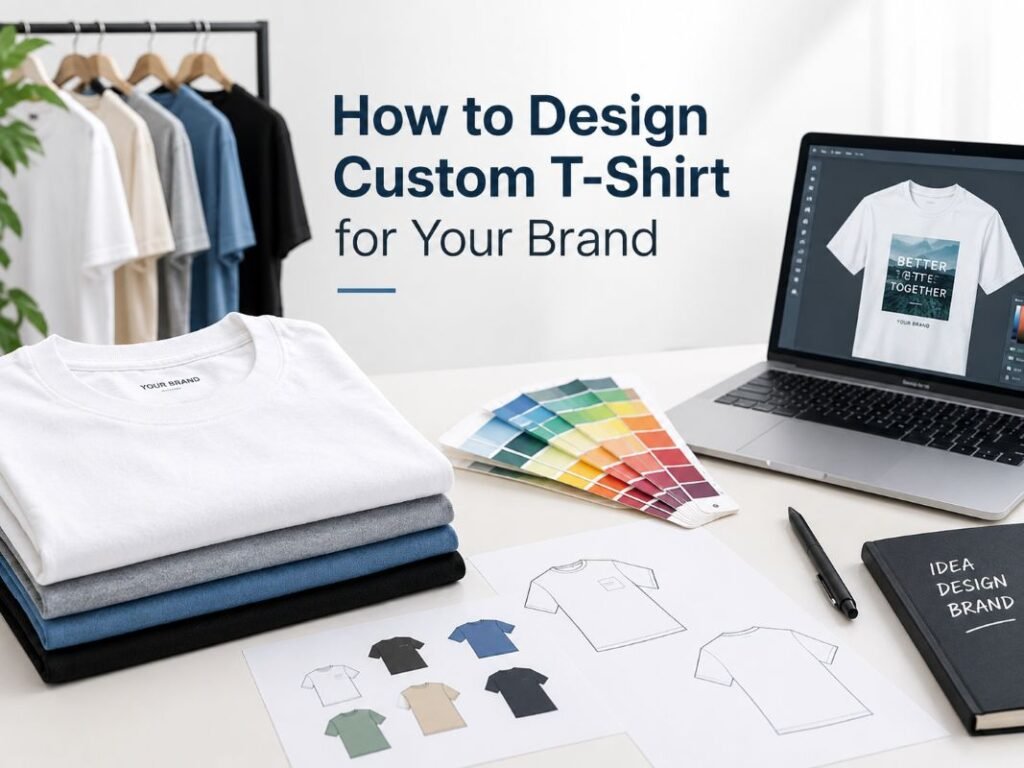
Creating a successful custom t-shirt design involves more than choosing a graphic and printing it on a garment. For clothing brands, every detail—from fabric and fit to colors, logos, and packaging—contributes to the product’s identity, quality, and market appeal.
Whether you are launching a new clothing brand, expanding an existing collection, or developing private label apparel, a well-planned T-shirt design can help your products stand out in a competitive market.
However, a design that looks good on screen may not always translate well into a finished garment. Fabric texture, printing methods, garment construction, and production costs all affect the final result. Working through these decisions before bulk manufacturing can help you avoid unnecessary revisions and create a more consistent product.
In this guide, we explain how to design custom T-shirts for your brand, from defining your target market to approving samples and preparing for bulk production.
1. Define Your Brand Identity and Target Market
Before developing your custom T-shirt design, clarify what your brand represents and who your products are intended for. Your design direction should reflect your customers’ preferences, expected price range, and intended use.
Identify Your Brand Positioning
Different brands require different T-shirt designs. Consider which direction best matches your business:
- Minimalist basics: Clean silhouettes, neutral colors, subtle logos, and versatile everyday styles.
- Streetwear: Oversized fits, heavyweight fabrics, bold graphics, and distinctive visual elements.
- Premium casualwear: Refined fabrics, carefully developed fits, restrained branding, and high-quality finishing.
- Sports and active lifestyles: Functional fabrics, comfortable movement, and designs suited to the intended activity.
- Promotional apparel: Clear logo placement, practical materials, and designs that support brand visibility.
Understand Your Target Customers
Think about your customers’ age range, lifestyle, preferred fit, buying habits, and the occasions when they will wear your products. These factors can guide your decisions about fabric, color, graphics, and construction.
For example, a premium streetwear brand may prioritize heavyweight cotton and an oversized silhouette, while an everyday basics brand may focus on comfort, versatile colors, and consistent sizing.
Defining your product positioning first makes the rest of the design process more focused and helps you communicate your requirements to a manufacturer.
2. Choose the Right T-Shirt Style and Fit
The silhouette is one of the most noticeable elements of a custom T-shirt. Even a simple design can look different depending on the shoulder width, body length, sleeve shape, and overall fit.
Popular T-Shirt Styles
- Regular fit: A versatile silhouette suitable for everyday casualwear.
- Slim fit: A closer-fitting style that creates a more streamlined appearance.
- Oversized fit: A relaxed silhouette often used for streetwear and contemporary fashion.
- Boxy fit: A wider body with a structured, modern shape.
- Heavyweight T-shirt: A style that uses heavier fabric to create a more substantial feel and appearance.
- Longline or cropped styles: Alternative proportions designed for specific fashion directions.
Define Your Fit Specifications
Do not rely only on terms such as oversized or regular fit. Different manufacturers may interpret these descriptions differently.
Instead, prepare a size chart that includes key measurements such as:
- Chest width
- Body length
- Shoulder width
- Sleeve length
- Sleeve opening
- Neck opening and collar dimensions
If you have a reference garment, share it with your manufacturer and explain which details you want to retain or change. A clear technical pack helps translate your design concept into measurable production instructions.
3. Select the Right Fabric and GSM
Fabric selection affects comfort, appearance, durability, fit, and production cost. The best material for your custom T-shirt depends on your brand positioning and the experience you want customers to have.
Common T-Shirt Fabric Options
- 100% cotton: A popular choice for everyday T-shirts because of its comfortable feel and versatility.
- Combed cotton: Often selected for a smoother surface and a more refined hand feel.
- Organic cotton: An option for brands seeking certified organic materials, subject to certification and sourcing requirements.
- Cotton-polyester blends: May offer a useful balance of comfort, durability, and maintenance performance.
- Stretch blends: Can provide additional flexibility for specific fitted designs.
- Specialty fabrics: Selected according to the desired texture, drape, performance, or product positioning.
Understand GSM
GSM stands for grams per square meter and measures fabric weight. It is an important specification when developing a T-shirt collection.
- Lightweight fabrics: Often suitable for warm-weather T-shirts and lightweight casualwear.
- Medium-weight fabrics: Commonly used for everyday basics and versatile retail collections.
- Heavyweight fabrics: Often selected for structured T-shirts, premium basics, and streetwear.
GSM alone does not determine quality. Yarn quality, knitting structure, finishing, shrinkage, and fabric construction also influence the final garment.
For a more detailed comparison of material options, read our guide to choosing fabric for custom T-shirts.
Before confirming a fabric, request swatches or samples and evaluate the hand feel, thickness, drape, color, and performance after washing.
4. Develop Your T-Shirt Color Palette
Color is an important part of brand recognition. A consistent palette can help your products look cohesive across different styles and seasonal collections.
Start with Core Colors
Many clothing brands begin with versatile colors such as black, white, gray, navy, and beige. These shades can form the foundation of a collection before additional seasonal colors are introduced.
Add Brand-Specific Colors
If your brand has established visual guidelines, use them to select T-shirt colors that match your identity. You can also develop seasonal palettes that complement your existing core colors.
Confirm Color Accuracy
Screen colors may look different from the final dyed fabric or printed garment. When color consistency is important, provide a suitable reference, such as a Pantone color specification, and confirm the production method with your manufacturer.
Always review a physical sample or approved color standard before bulk production. Lighting, fabric composition, dyeing, and finishing can affect the final appearance.
5. Create a Distinctive Logo and Graphic Design
Your logo and graphics should complement the garment rather than compete with its overall design. Consider the size, placement, colors, and intended visual effect before selecting a decoration method.
Popular Logo Placement Options
- Left chest: A classic position for small logos and minimalist branding.
- Center chest: Suitable for prominent logos, slogans, and graphic designs.
- Full front: Useful for statement graphics and large illustrations.
- Back print: Creates additional space for artwork, typography, or brand messaging.
- Sleeve logo: Adds a subtle branding detail.
- Neck branding: Provides an alternative to traditional external branding, depending on the garment construction.
Prepare Print-Ready Artwork
Provide high-resolution artwork and the file format requested by your manufacturer. Vector formats such as AI, EPS, or suitable PDF files are often useful for logos, while high-resolution raster files may be appropriate for certain photographic or detailed designs.
Include the intended print dimensions, placement measurements, color references, and any important instructions about the artwork. This helps the production team interpret your design accurately.
6. Choose the Right T-Shirt Printing or Decoration Method
The decoration method affects the appearance, hand feel, durability, production cost, and suitability of your design for different fabrics and order quantities.
Screen Printing
Screen printing is often considered for repeat designs and medium-to-large production runs. It can work well for bold graphics and designs with defined colors, although setup requirements and the number of colors affect the overall cost.
Direct-to-Garment Printing
Direct-to-garment (DTG) printing applies textile ink directly to the garment. It can be useful for detailed illustrations, multicolor artwork, and selected smaller production runs, depending on the fabric and equipment.
Heat Transfer Printing
Heat transfer methods can support certain logo designs, graphics, and customized artwork. The result depends on the transfer material, fabric compatibility, application process, and intended use.
Embroidery
Embroidery creates a stitched logo or decorative effect. It can suit selected minimalist and premium designs, but the fabric, artwork complexity, stitch density, and garment construction should be evaluated before production.
There is no universally best method for every design. Compare the artwork, fabric, order quantity, desired finish, and cost before making a decision.
For a closer comparison, see our guide to screen printing vs. DTG for custom T-shirts.
7. Customize Labels, Neck Details, and Packaging
For private label brands, customization extends beyond the visible graphic. Labels, trims, and packaging help create a more complete product identity.
Brand Labels
Depending on your design, you can consider printed neck labels, woven labels, or other suitable branding options. Make sure the label size, material, placement, and attachment method are appropriate for the garment.
Care and Size Labels
Care labels provide garment care instructions, while size labels help customers identify the correct size. Required labeling information may vary by product and target market, so confirm the applicable requirements before production.
Hangtags and Packaging
Custom hangtags, branded bags, and retail boxes can reinforce your brand presentation. However, additional packaging components may affect unit costs, minimum quantities, and production lead times.
Discuss these requirements early so that they can be included in the product specifications and quotation.
8. Create a Technical Pack for Your Custom T-Shirt
A technical pack, often called a tech pack, documents the specifications needed to manufacture your design consistently. It helps reduce misunderstandings between your brand and the factory.
A useful T-shirt tech pack should include:
- Front and back technical drawings
- Product style and construction details
- Fabric composition and GSM
- Color references
- Size chart and measurement tolerances
- Logo artwork and placement dimensions
- Printing or embroidery instructions
- Labels, trims, and packaging details
- Stitching and finishing requirements
- Reference images and special instructions
If you do not have a complete tech pack, provide clear reference images, measurements, and a description of your intended product. Ask your manufacturer which additional specifications are needed before sampling.
The more complete your information is, the easier it becomes to evaluate feasibility, receive a comparable quotation, and review the finished sample.
9. Request a Sample Before Bulk Production
A physical sample allows you to evaluate whether your custom T-shirt design works as intended. It is an important step before committing to a larger production order.
What to Check During Sample Review
- Fit and measurements: Compare the sample with your approved size chart.
- Fabric: Check hand feel, thickness, drape, and appearance.
- Color: Compare the garment with your approved reference.
- Construction: Inspect the neckline, shoulder seams, sleeves, hems, and stitching.
- Print or embroidery: Review size, placement, color, finish, and durability.
- Branding: Confirm labels, hangtags, and packaging details.
- Washing performance: Where relevant, evaluate shrinkage, color retention, and decoration performance using appropriate tests.
If revisions are required, provide specific feedback and record the agreed changes. Approve the final sample and specifications before the manufacturer begins bulk production.
For additional guidance, read our custom apparel sampling guide.
10. Plan Your Budget, MOQ, and Production Requirements
Design decisions affect manufacturing costs. Fabric type, GSM, construction, decoration, colors, labels, packaging, and order quantity can all influence the final quotation.
When requesting a quote, provide your manufacturer with:
- Product design and reference images
- Fabric composition and GSM requirements
- Colors and size range
- Logo artwork and decoration method
- Labels and packaging specifications
- Estimated quantity per style and color
- Target delivery date and destination
Ask the supplier to clarify the MOQ per style and color, sampling charges, production lead time, and any additional costs. Compare quotations using the same product specifications to make a fair assessment.
If you are developing a new brand or testing a new design, our guide to finding a custom T-shirt manufacturer with low MOQ explains what to consider when planning order quantities.
Do not choose a design solely because it is inexpensive to produce. Instead, balance product quality, customer expectations, selling price, and production feasibility.
11. Common Mistakes to Avoid When Designing Custom T-Shirts
Following Trends Without a Clear Brand Direction
Trends can provide inspiration, but every design should fit your brand identity and target customers. A consistent product direction is often more useful than copying unrelated trends.
Ignoring Fabric and Print Compatibility
Not every fabric is suitable for every decoration method. Confirm compatibility with your manufacturer and request a sample using the intended materials.
Providing Incomplete Design Instructions
Vague instructions can lead to incorrect measurements, artwork placement, colors, or labels. Use a tech pack or clearly documented specifications wherever possible.
Skipping Physical Sample Approval
A digital mockup cannot fully demonstrate fabric texture, garment fit, print feel, or construction quality. Review a physical sample before authorizing bulk production.
Overlooking Production Costs
Complex graphics, special fabrics, custom dyeing, and premium packaging may increase costs or require additional lead time. Evaluate these factors before finalizing the design.
12. How to Work with a Custom T-Shirt Manufacturer
A reliable manufacturing partner can help you assess design feasibility, select appropriate materials, develop samples, and prepare for bulk production.
Before choosing a supplier, evaluate its experience with similar products, customization capabilities, communication, quality control procedures, and ability to meet your order requirements.
Ask for clear information about sampling, MOQ, pricing, production lead time, and the specifications required for your project. Confirm important details in writing before moving forward.
If you are comparing suppliers in China, read our guide on how to find a reliable T-shirt manufacturer in China.
Conclusion: Turn Your Custom T-Shirt Design into a Market-Ready Product
Designing a custom T-shirt for your brand requires careful planning across product positioning, fit, fabric, colors, graphics, printing, labels, and packaging. Each decision contributes to the final garment and should be considered as part of the complete product development process.
Start with a clear brand direction, document your specifications, and work with your manufacturer to develop and approve a physical sample. Review costs, MOQ, quality requirements, and production timelines before confirming your bulk order.
With a well-defined design and a reliable manufacturing process, you can create a consistent T-shirt collection that reflects your brand identity and meets your customers’ expectations.
Develop Your Custom T-Shirt Collection with Beyson Apparel
Beyson Apparel provides OEM/ODM apparel manufacturing services for clothing brands, wholesalers, retailers, and private label businesses. Our team can discuss your T-shirt design, fabric options, branding, packaging, sampling, and bulk production requirements.
To start your project, prepare your design references, target quantity, fabric preferences, size range, and customization requirements.
Email: sales@beysonapparel.com
* This article was written by the manufacturing team of Beyson Apparel. We are a clothing ODM/OEM factory with 15+ years of experience, covering products such as Underwear, T-shirt, Polo Shirts, Hoodies, Pajamas, Shorts and more. Direct inquiry, reply within 12 hours *